Tell us about the job
Takes about a minute. No obligation.
Gas-fired water heaters run every day of the year, not just through a heating season, and the components that take the hardest beating are the ones touching combustion directly: the burner, the gas valve, and the thermocouple. Utility gas heats more occupied homes in Lancaster County, South Carolina than any other fuel, at 50.4% (2020-2024 ACS 5-year). With gas dominant at that scale, contractors here work on gas units overwhelmingly, and the failure patterns they find reflect it. A thermocouple that has cycled through years of daily demand fails differently than one that sat idle most of the year. The burner orifice collects deposits; the gas valve wears at its seat. A contractor diagnosing a repair in this county checks those components before the tank, because the tank often outlasts the parts feeding it.
Half the homes in Lancaster County, South Carolina were built in 2000 or earlier (2020-2024 ACS 5-year). That puts a large share of the county's housing in a different position from stock whose plumbing and electrical were laid in for equipment generations removed from what sits in the utility room today. A water heater installed in a house this age is likely running in a space that was built for something close to it. What a contractor opens to diagnose a repair reflects the condition of the unit itself, and faults trace to the components, the sediment load, or how the system has been maintained, not to infrastructure that was never meant to carry it.
The Parts of a Water Heater a Contractor Checks During a Repair
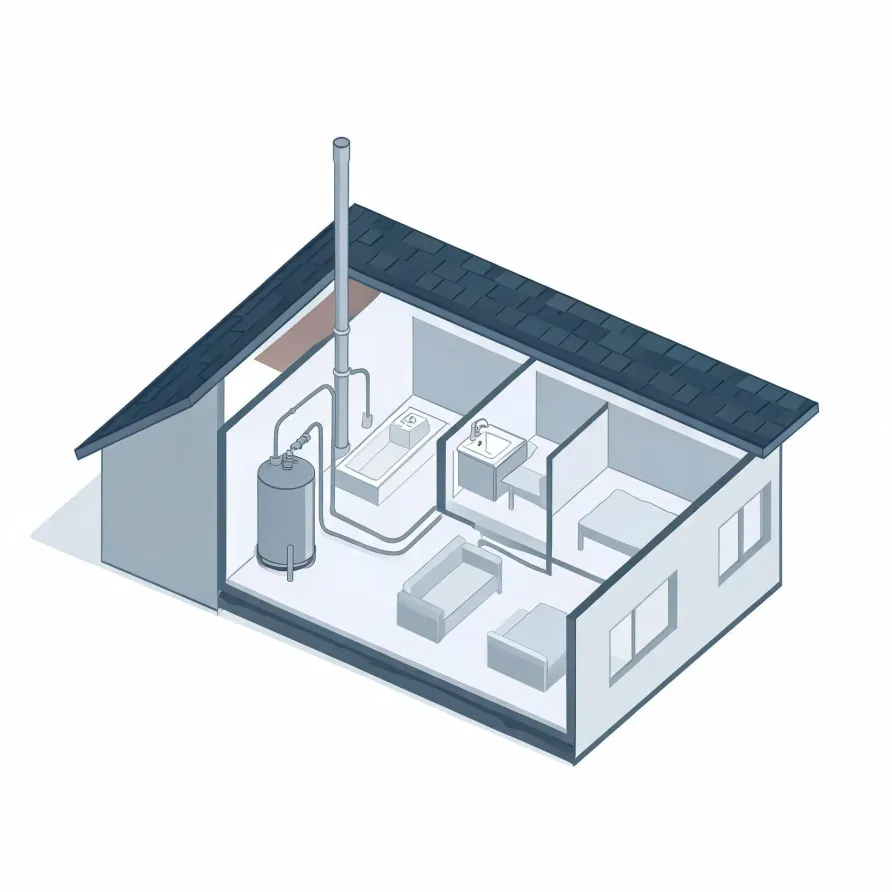
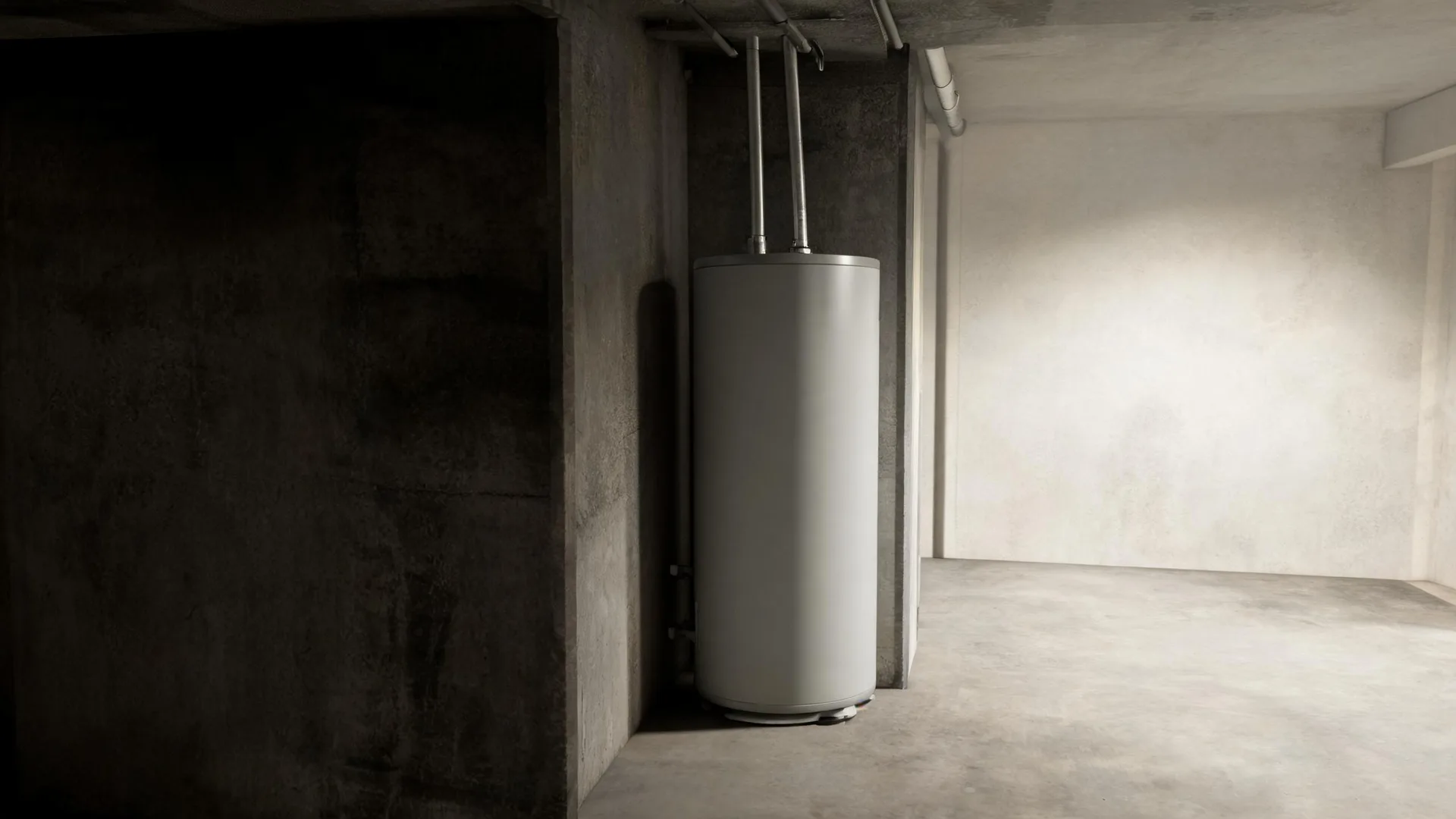
The tank is the piece most homeowners recognize, a large insulated vessel that sits in a utility room, basement, or garage and holds water at a set temperature. On a gas unit, a burner assembly sits at the base of the tank; on an electric unit, heating elements run through the tank wall. When either fails, the water goes cold or never gets hot in the first place. The thermostat controls the target temperature and is one of the first things a contractor tests when the output is wrong.
The pressure relief valve mounts to the side of the tank and opens automatically if internal pressure climbs beyond a safe point. A dip tube runs down through the top of the tank and directs incoming cold water to the bottom so hot water can be drawn off the top without mixing. The anode rod hangs inside the tank to slow corrosion of the tank walls, and a contractor will pull it to see what condition the interior is in.
The drawing shows a typical layout, and a licensed contractor will determine which parts and conditions apply to the specific unit in your home.
Find a contractor in Lancaster CountyLancaster County by the Numbers
191 severe weather events were recorded in Lancaster County, South Carolina between 2015 and 2024.
NOAA National Centers for Environmental Information, Storm Events Database, bulk CSV export, events 2015-01-01 through 2024-12-31.Half the homes in Lancaster County, South Carolina were built in 2000 or earlier (2020-2024 ACS 5-year).
U.S. Census Bureau, 2020-2024 American Community Survey 5-Year EstimatesLancaster County, South Carolina holds 43,832 housing units (2020-2024 ACS 5-year).
U.S. Census Bureau, 2020-2024 American Community Survey 5-Year EstimatesOwners occupy 83.3% of the occupied homes in Lancaster County, South Carolina (2020-2024 ACS 5-year).
U.S. Census Bureau, 2020-2024 American Community Survey 5-Year EstimatesSevere Weather Events in Lancaster County
Storms and temperature swings put real load on water heaters, driving sediment buildup, pressure fluctuations, and wear that shortens equipment life. Lancaster County's weather record shapes how hard local units work and how often they need attention.
191 severe weather events, 2015–2024. Source: NOAA National Centers for Environmental Information, Storm Events Database.