Tell us about the job
Takes about a minute. No obligation.
Electric water heaters carry a different repair profile than gas ones, and that matters here. Electricity heats more occupied homes in Greenwood County, South Carolina than any other fuel, at 67.7% (2020-2024 ACS 5-year). A home running electric resistance heat for water relies entirely on the elements and thermostats to do that work, with no burner, no flue, and no combustion air supply to introduce separate failure points. When an element burns out or a thermostat drifts, the system produces no hot water at all. A contractor on a repair call in this county starts there, confirming element continuity and thermostat calibration before moving to the tank itself.
Water heaters in older housing sit inside systems that were never designed around them specifically. Half the homes in Greenwood County, South Carolina were built in 1977 or earlier (2020-2024 ACS 5-year). That matters for repair work because a contractor who opens a failed unit and finds a fixable component still has to confirm whether the relief valve piping, the supply line material, and the circuit feeding the heater can carry a repaired system safely. If any of those cannot, the scope of the job changes. Parts for the heater itself are often the straightforward half of the answer.
The Parts of a Water Heater a Contractor Checks During a Repair
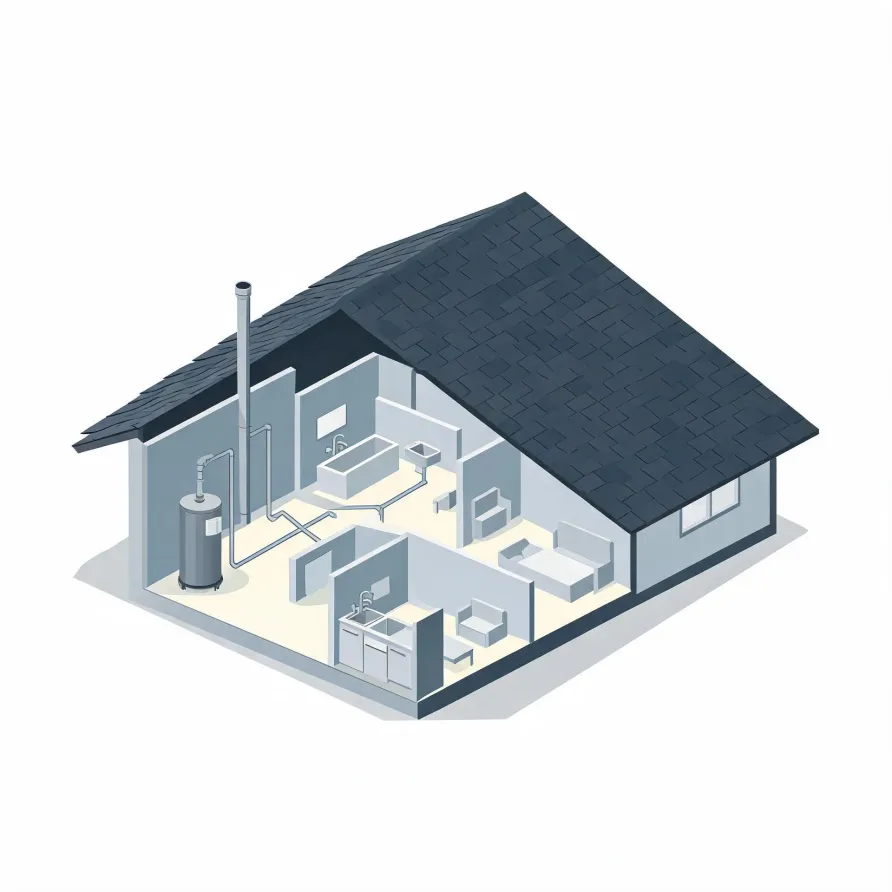
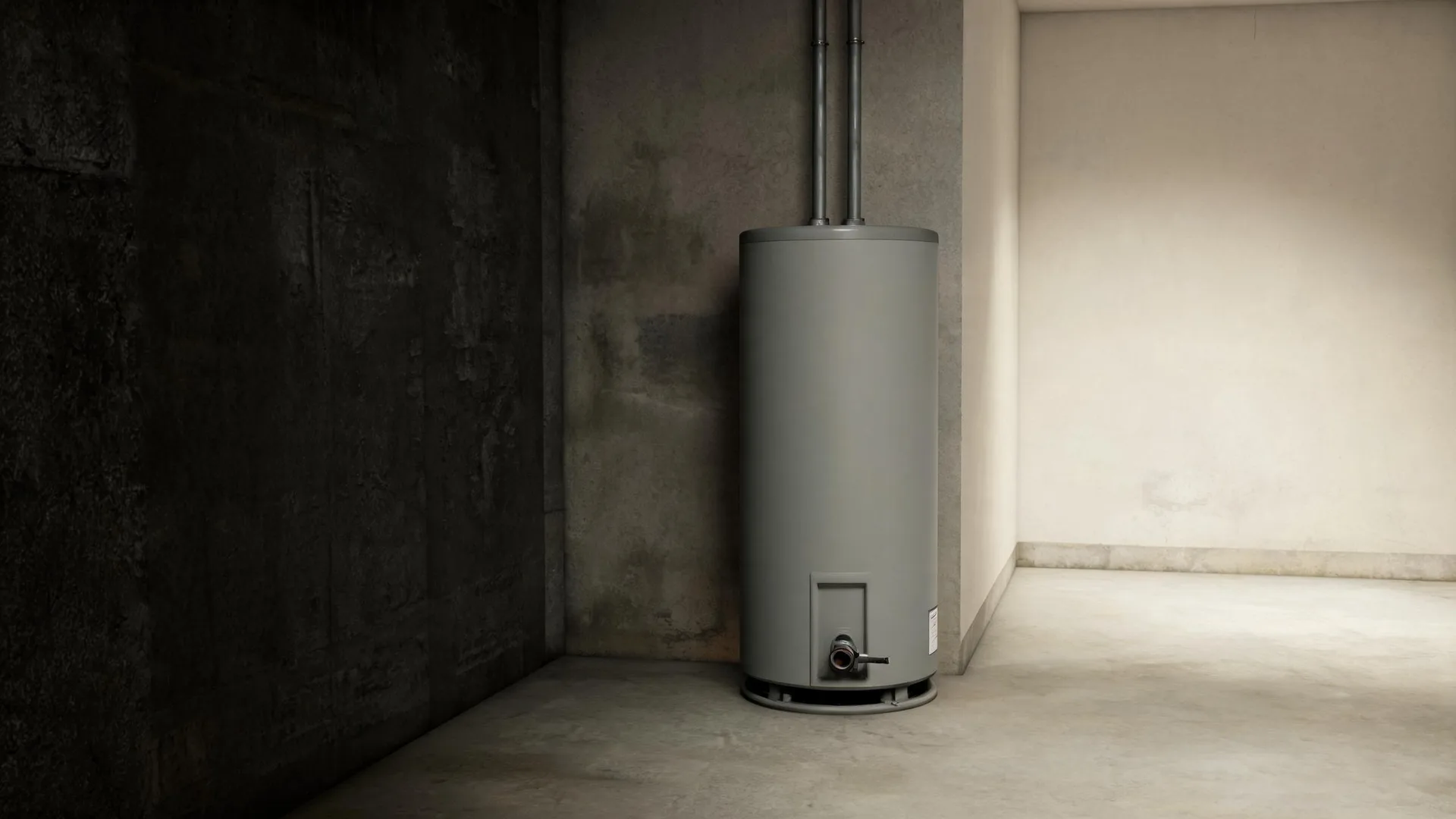
The tank is the piece a homeowner sees first, usually standing in a utility closet, basement, or garage. It holds and heats the water supply for the house. The burner assembly or heating element sits at or near the base of the tank and is where a contractor looks when hot water stops arriving or arrives inconsistently.
The thermostat mounts on the outside of the tank and tells the heating source when to fire and when to stop. The pressure relief valve, positioned on the side or top of the tank, is a safety device that opens if internal pressure climbs too high. The anode rod hangs inside the tank and slows corrosion from the inside out.
The drawing shows a general layout of a water heater system, and a licensed contractor determines what applies to the specific unit and installation in your home.
Find a contractor in Greenwood CountyGreenwood County, by the numbers
69 severe weather events were recorded in Greenwood County, South Carolina between 2015 and 2024.
NOAA National Centers for Environmental Information, Storm Events Database, bulk CSV export, events 2015-01-01 through 2024-12-31.Half the homes in Greenwood County, South Carolina were built in 1977 or earlier (2020-2024 ACS 5-year).
U.S. Census Bureau, 2020-2024 American Community Survey 5-Year EstimatesGreenwood County, South Carolina holds 31,702 housing units (2020-2024 ACS 5-year).
U.S. Census Bureau, 2020-2024 American Community Survey 5-Year EstimatesOwners occupy 67.0% of the occupied homes in Greenwood County, South Carolina (2020-2024 ACS 5-year).
U.S. Census Bureau, 2020-2024 American Community Survey 5-Year EstimatesSevere Weather Events in Greenwood County
Extreme weather puts real stress on water heaters, from pressure fluctuations during storms to the demands of recovery after extended outages. How often that stress occurs in Greenwood County shapes how hard local equipment works and how often repairs become necessary.
69 severe weather events, 2015–2024. Source: NOAA National Centers for Environmental Information, Storm Events Database.