SC Water Heater Pros

Why your water heater is slow to recover in South Carolina

Tell a local repair pro what your water heater is doing.

Get matched

A water heater that takes longer and longer to give you hot water again usually has a heating element going bad, or a tank crowded with sediment. Most homes in South Carolina heat water with electricity, and electric heaters have one or two elements that do the work. When an element fails partway, the other has to make up the difference, and recovery time stretches out. Sediment does something similar from the bottom of the tank up. It settles over the heating element and acts like a blanket, so the element has to push its heat through buildup before it ever reaches the water. Either way, the tank still gets hot eventually. It just takes longer each time, and the gap between a shower that runs warm and one that turns cold keeps shrinking. Left alone, the element can burn out completely, or the tank can start working harder than it should for the hot water you get.

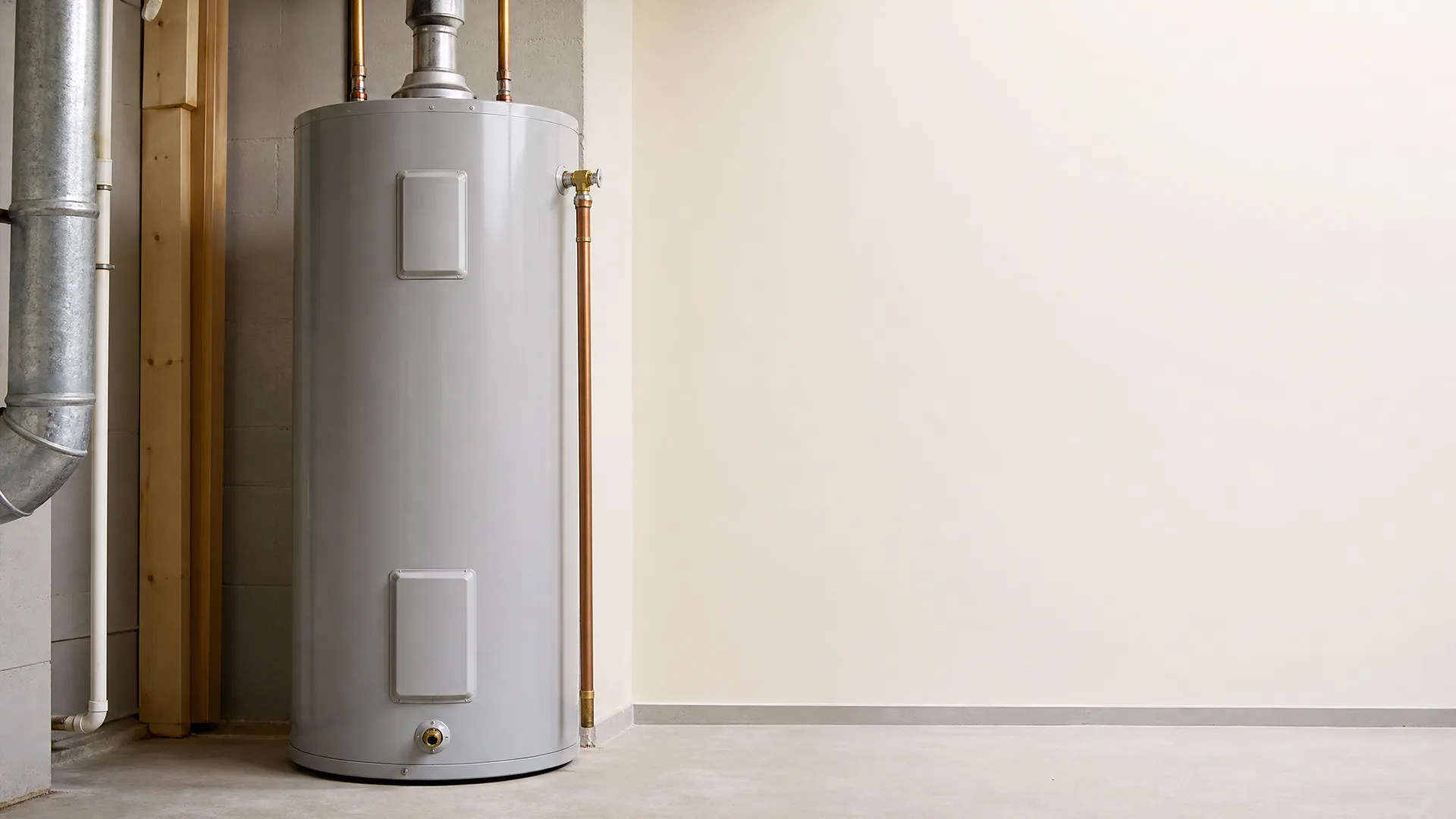
A gray cylindrical water heater with copper pipes stands in a basement corner beside a metal duct and wood framing, next to a plain beige wall and concrete floor.

How a bad element shows up

An electric water heater with two elements uses the bottom one to recover after a draw. If that one fails or coats over with scale, the top element alone has to reheat the whole tank, and that takes far longer. You may notice the water gets warm but never hot, or it runs hot for a few minutes then turns lukewarm fast.

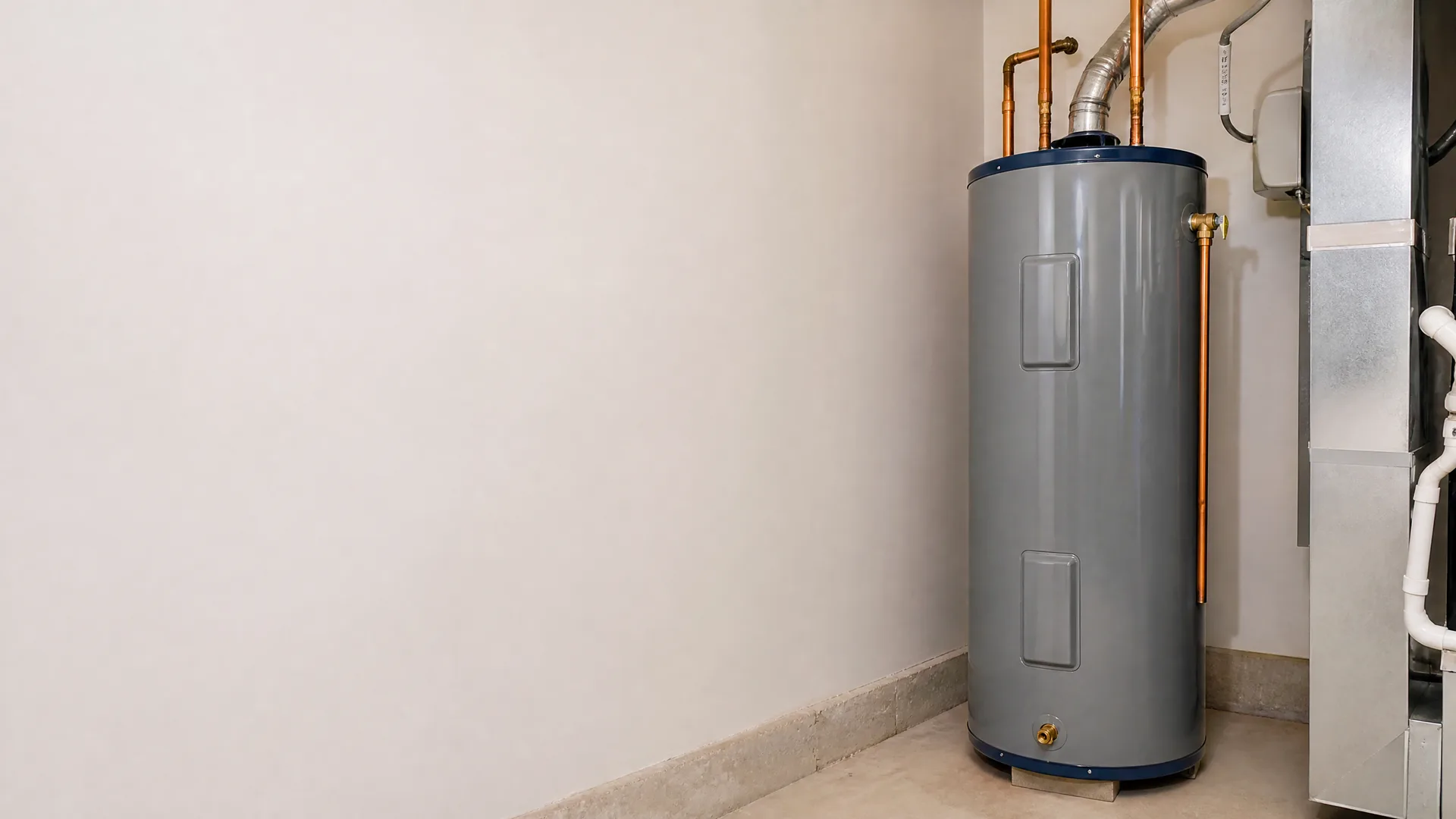
A gray cylindrical water heater with copper pipes stands in a corner of a basement utility room beside metal ductwork and white PVC piping.

What sediment does over time

Sediment settles below the lower element and acts like a blanket between it and the water. The element has to work through that layer before it can heat anything, and it can also burn out sooner because of the extra strain. A tank that rumbles or pops when heating usually has this buildup sitting at the bottom.

Why does my water heater take so long to heat back up?

Why does my water heater take so long to heat back up?

A failing lower element or a layer of sediment is slowing the recovery

The lower element does most of the work of bringing the tank back up to temperature after a shower or a load of dishes. When it starts to fail, or when sediment settles on top of it, the heat has to pass through that layer before it reaches the water, and the tank takes much longer to recover. With South Carolina on electric water heaters in most homes, this is the part that wears first, not the thermostat and not the wiring. Power here runs at a typical rate, so a struggling element also shows up as a higher bill for the same amount of hot water, since it runs longer to do the same job.

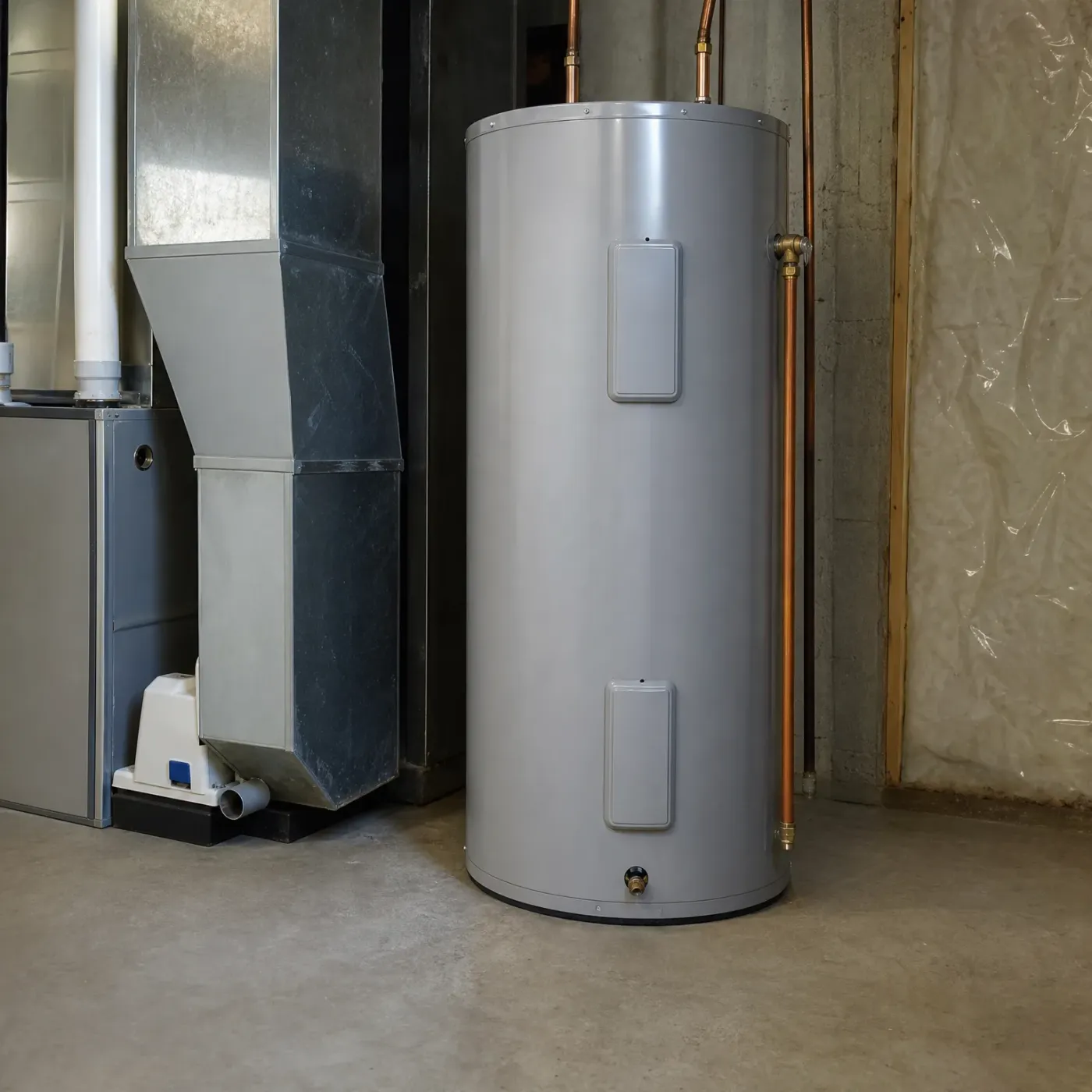
A gray cylindrical electric water heater with two access panels stands on a concrete floor in a basement, with copper pipes above and behind it, sheet-metal ductwork and a furnace to the left, and a plastic-covered insulated wall to the right.

Normal recovery

This is what steady recovery looks like. The elements heat in sequence, the tank comes back up within the hour, and nobody upstairs notices a draw happened. Copper lines and a sound tank mean the only thing doing the work is electricity, same as it should.

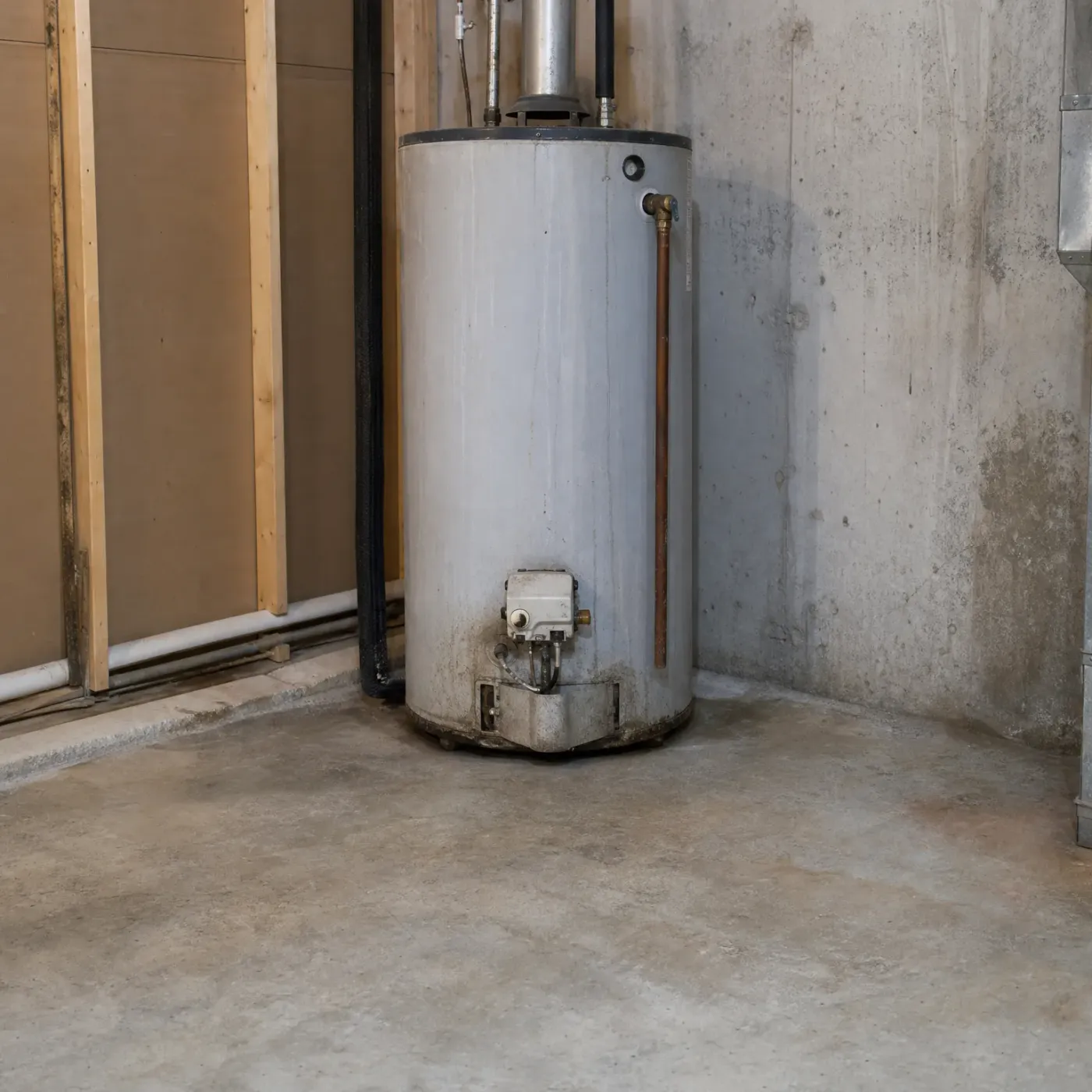
An older gas water heater with a copper pipe and flue stands on a concrete floor in a basement corner between a bare concrete wall and an unfinished wood-framed wall.

Slipping recovery

Rust at the base and grime around the burner point to a tank that has been losing ground for a while. A gas unit in this shape often has sediment built up low in the tank, and that layer sits between the heat and the water, so every shower afterward takes longer to refill.

A woman in a cream cowl-neck sweater sits by a window with snow outside, in a dimly lit living room with a sofa, lit lamp, mirror, candles and a fireplace.
A woman in a gray turtleneck sweater sits beside a large window looking out at snow-covered evergreen trees, in a dimly lit living room with a lit fireplace, lamps, couch and houseplant.
A woman in a cream turtleneck sweater stands beside a large window with snow-covered ground and bare trees outside, in a dimly lit living room with lamps, a sofa and framed art.
A woman in a grey cowl-neck sweater stands indoors near a window, looking out at falling snow, with a lamp, framed picture and couch in the warmly lit room behind her.
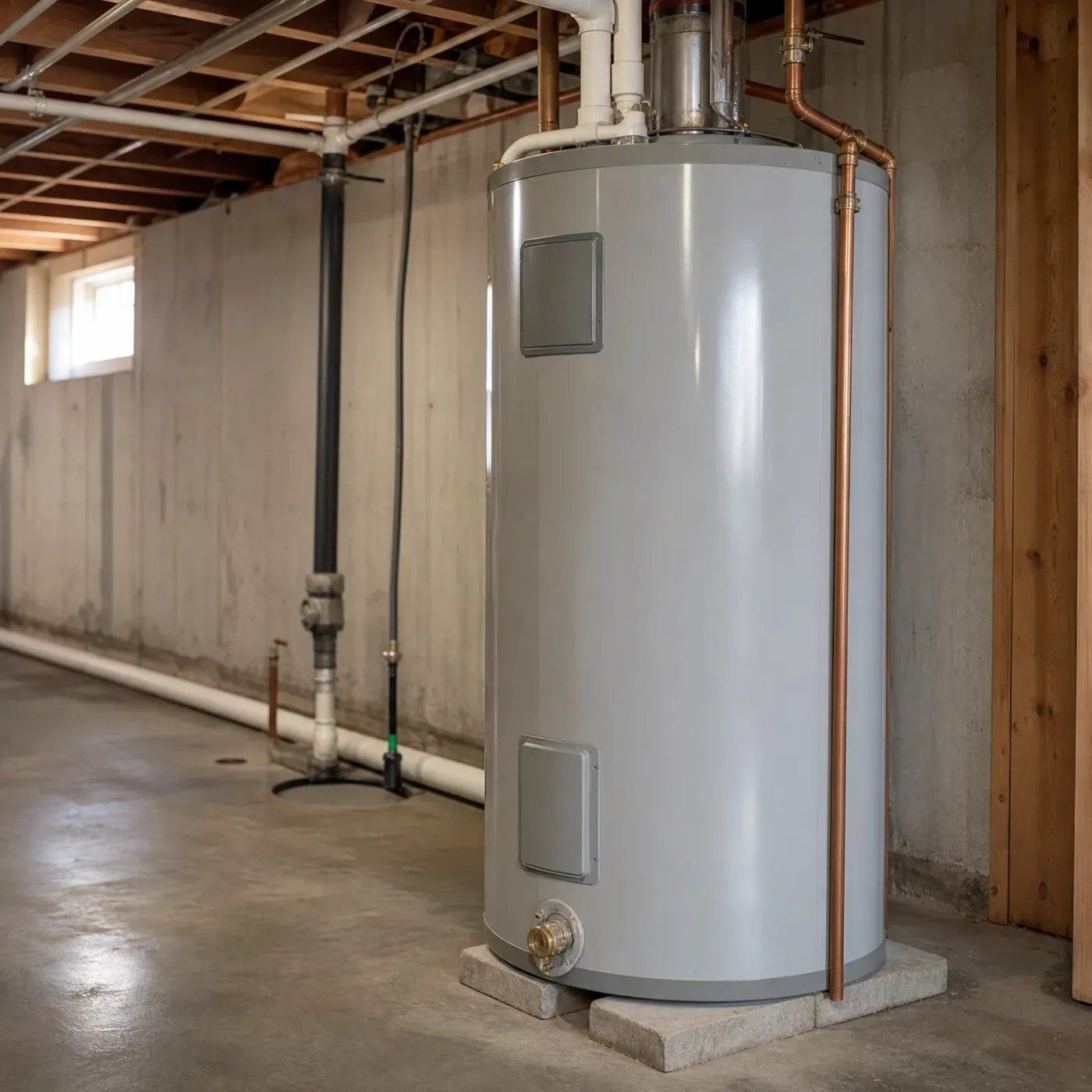
A large white cylindrical water heater on concrete blocks in a basement with poured concrete walls, exposed joists, copper and PVC piping, and a small window.

The right pro for this job

Send the request today and stop worrying about who to call.

Describe your water heater job, and a local pro who handles it gets in touch.

Send it today

Sending the form costs nothing.

Is this just my house, or is something wrong

You notice it in small ways first. The shower runs cool after one person showers instead of three. You run the dishwasher and then can't get a hot bath for an hour. Someone mentions the water never got past lukewarm. If you check the tank, it may be making a low rumbling or popping sound it didn't used to make, that's sediment shifting around the lower element. Left alone, a struggling element usually keeps drawing power without heating the water well, so your bill climbs even as the hot water gets harder to come by. A tank that sits in this state can also strain the one working element until it fails too, and then you have no hot water at all.

  1. The thermostat calls for heat when the tank cools below its setpoint

  2. Power reaches the lower element first to recover the tank

  3. Sediment or a failing coil makes that element work harder or quit

  4. The upper element kicks in once the top of the tank cools

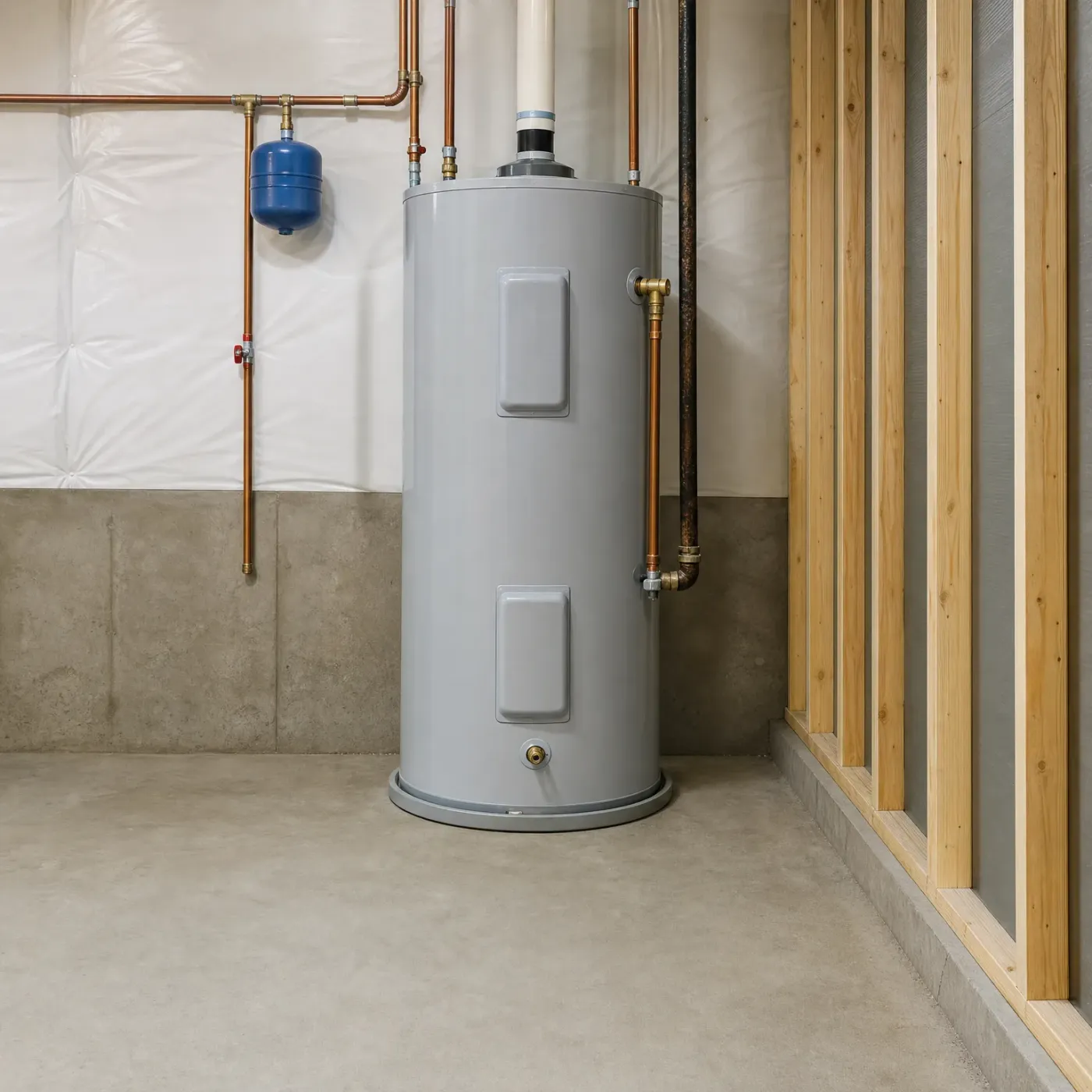
A gray cylindrical water heater stands on a concrete basement floor against a plastic-sheeted insulated wall, with copper supply pipes, a blue expansion tank, a black vertical pipe, and exposed wood wall framing at right.
A tank in good shape recovers on its own schedule and the copper lines and expansion tank show a system that was kept up.
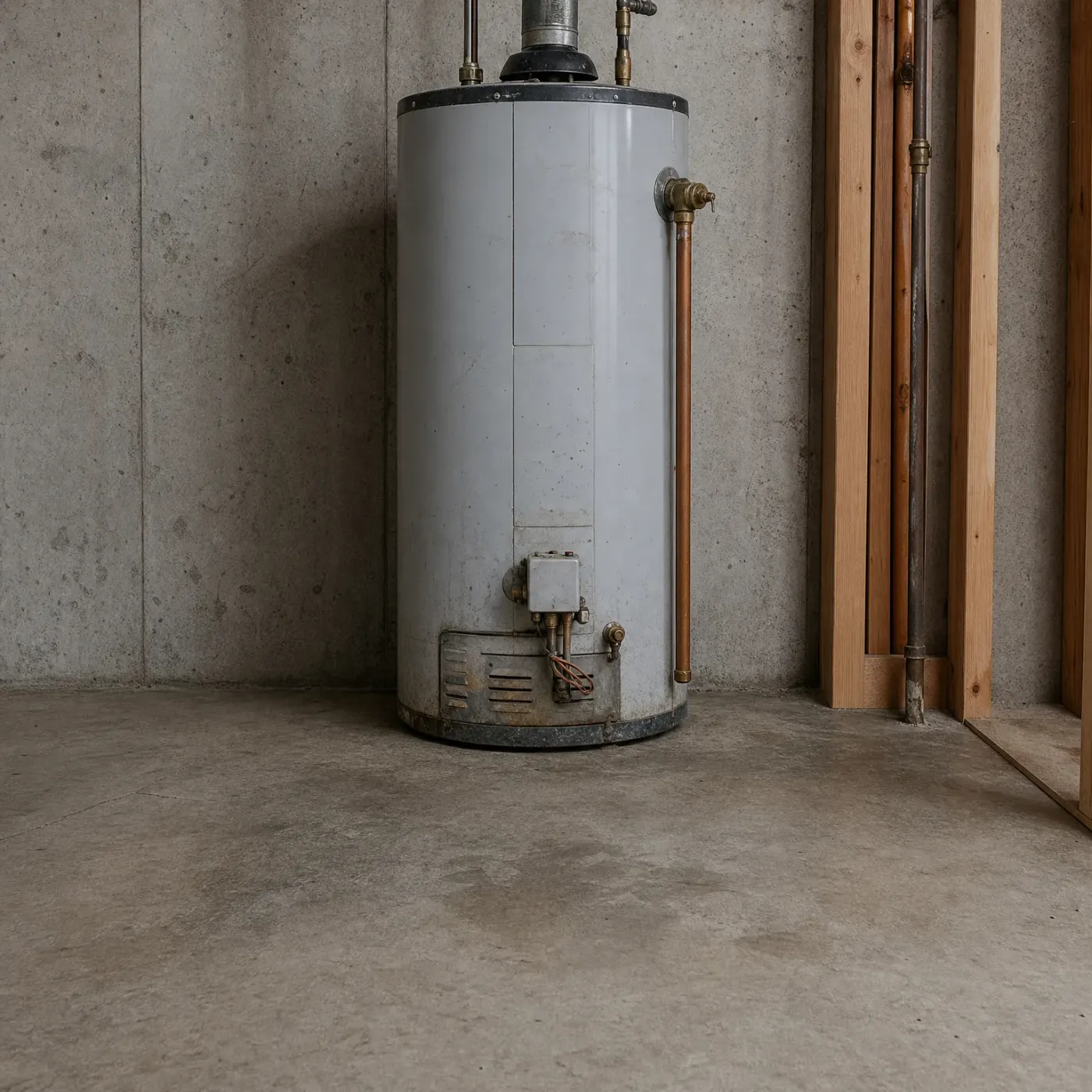
An older gray gas water heater with copper and brass piping stands on a concrete floor against a concrete wall, beside exposed wooden wall framing and vertical pipes.
Rust and grime around the burner point to years of neglect, and a tank in this shape struggles to recover like it used to.
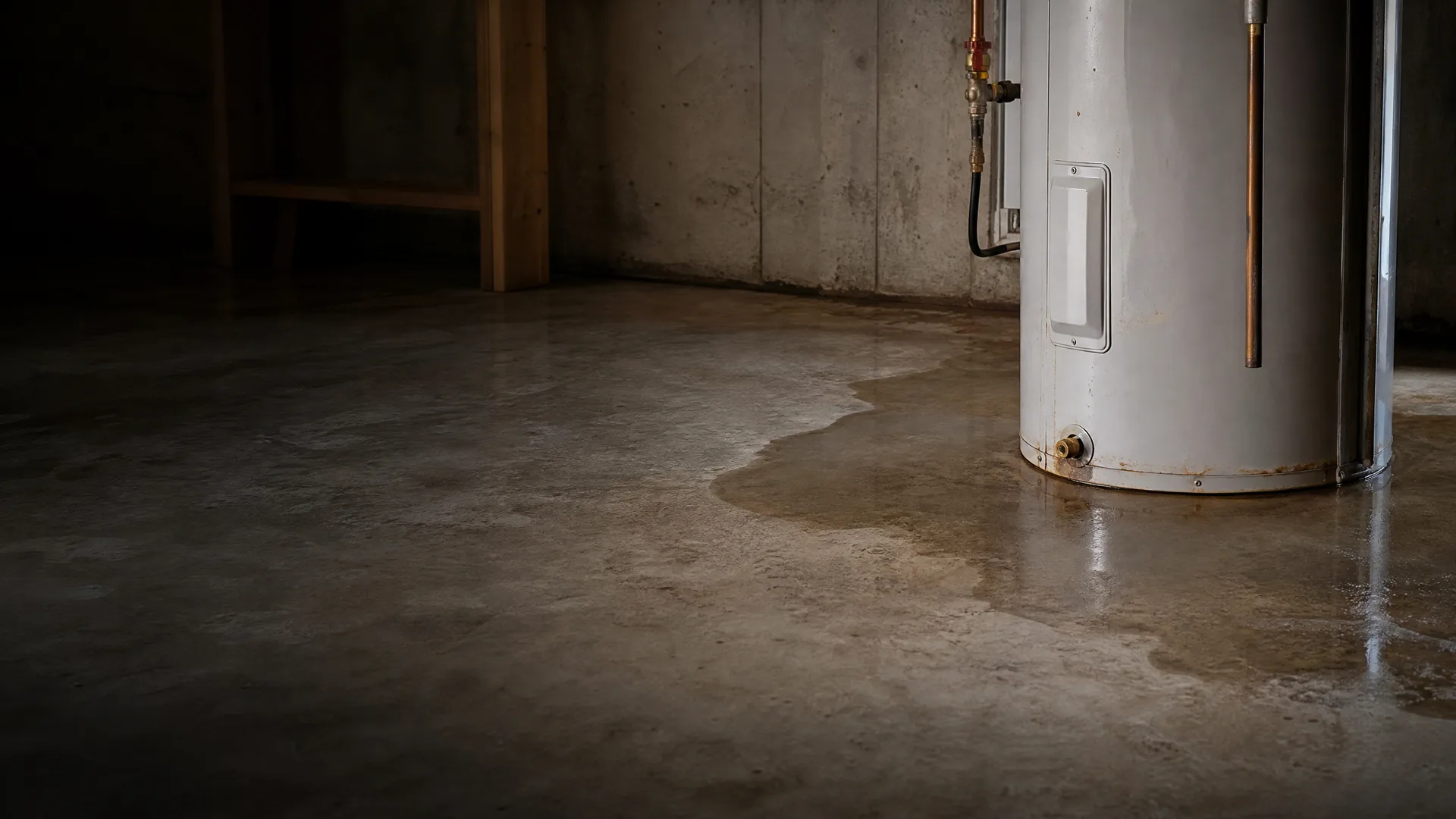
A white cylindrical water heater with copper pipes stands against a concrete basement wall, with water pooled across the surrounding concrete floor.

Saturday morning, and the only thing on your list was laundry. You go down to switch the load and your socks go wet before you see why. Water is spread out from the base of the tank, already reaching the drain in the floor, already touching the bottom of a cardboard box you meant to move months ago. The tank itself is quiet, no hiss, no drip you can point to, just the puddle getting wider while you stand there in the muggy basement air trying to figure out how long this has been going on. Upstairs someone asks if the shower's free. You don't answer yet. You're still looking at the water, and at the rust line creeping down the side of the tank where it meets the floor.


70.8% of homes statewide heat with electricity

With almost all South Carolina homes heating water with electricity, those two elements are doing all the work when your tank recovers. There's no gas burner to pick up slack. When one element weakens, the tank falls behind and stays behind.

ACS 2020-2024 5-year B25040

A bearded man in a blue and brown plaid flannel shirt stands indoors looking out a window at snow-covered trees, with a ceramic mug on the windowsill.
A man in a blue T-shirt sits on a light gray sofa, laughing while looking at an open laptop in the foreground, with a framed picture, lamp and potted plant behind him.

What a slow recovery tells you

  • A tank that takes longer each week to recover almost always traces back to one weak element or a buildup of sediment.
  • Electric water heaters in South Carolina depend on those elements alone, with no gas burner to cover for a failing one.
  • The pattern is easy to spot once you know it: hot water runs out sooner, and the wait to get it back keeps growing.
  • Catching it now, while it is still a slow recovery and not a cold shower, keeps this a repair instead of a replacement.
  • Once you send the form, a contractor who handles this in your area takes it from there and reaches out to you.
  • You stop chasing the problem yourself and wait for someone who already knows what a slow tank like yours needs.

A water heater that needs more time every week to catch back up is telling you something specific. One element is losing the fight, or sediment has built up enough to get in its way, and in a South Carolina home that runs on electricity, there is no gas burner behind it to make up the difference. The elements are the whole system. When one slows down, the tank falls behind and the gap between showers gets longer until someone finally runs out mid rinse.

That gap is the warning, and it shows up before anything fails outright. Shorter showers, a longer wait between loads of laundry and a hot bath, a tank that used to keep up with three people and now struggles with one. None of that means the tank is done. It means the part doing the work needs attention while it is still just slow, not cold.

Sending the form is where your part of this ends. A contractor who works on water heaters in your area gets your information and reaches out to you, and from there it is their job to find out which element is failing or how much sediment has settled in the bottom of the tank. You do not have to track down who handles this or figure out the right questions to ask them. That part is off your plate the moment you send it.

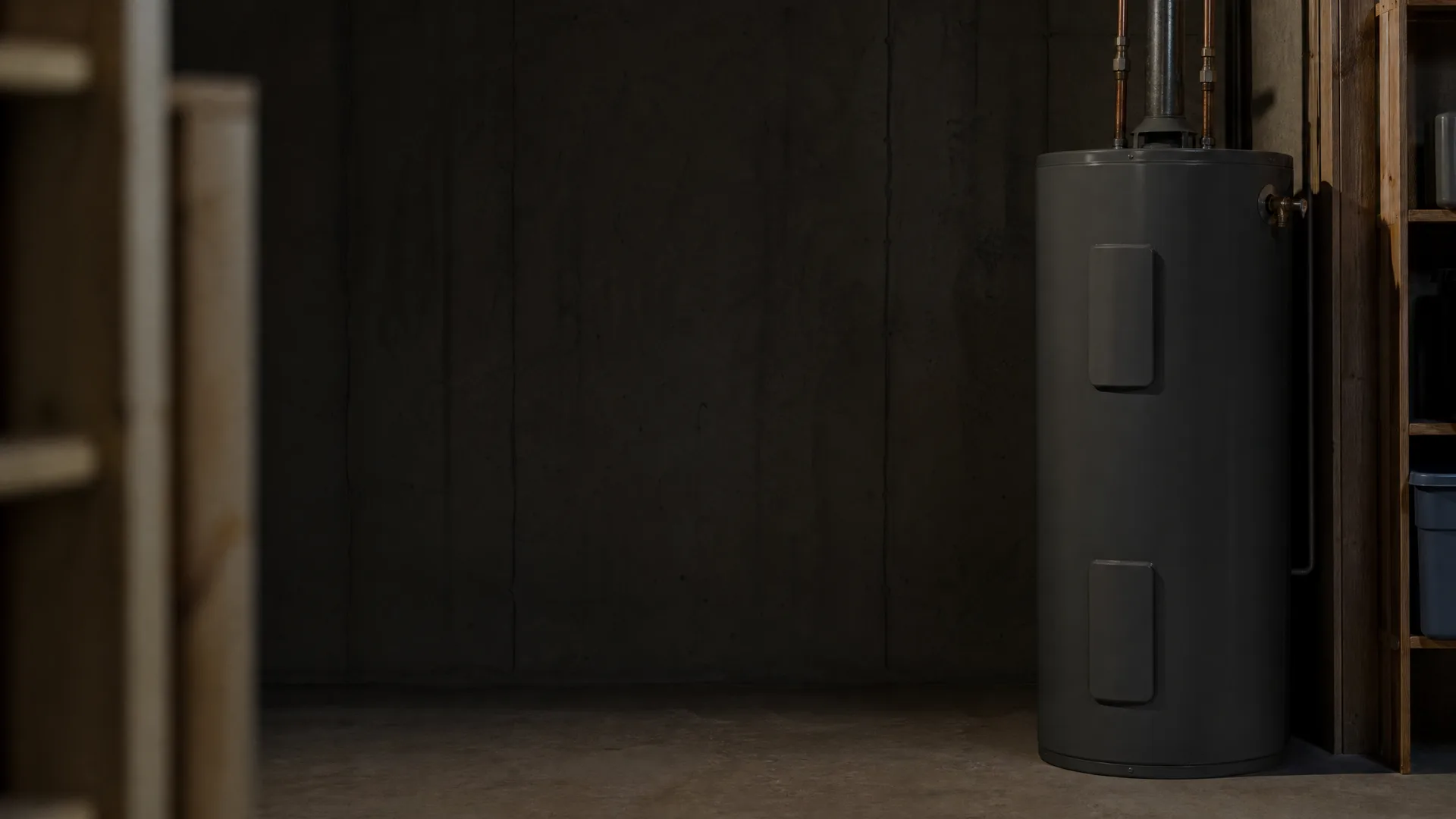
A dark gray cylindrical water heater with copper pipes at its top stands against a concrete basement wall, with wooden shelving and framing in the foreground at both edges.

Matched to your water heater job

Send the request and finding a pro stops being your problem.

Step 1 of 3: Equipment