Profile view of a bearded man wearing a black baseball cap and a dark gray T-shirt against a plain light background.

Why your hot water is lukewarm in South Carolina

Step 1 of 3: Equipment

Lukewarm water almost always means the heating element or thermostat inside the tank has failed, not that the whole unit is dying. Most homes here run electric water heaters with two elements, an upper and a lower. When the lower element burns out, the upper one still heats the water at the top of the tank, so you get a few minutes of warmth that fades fast as it mixes with cold water below. A bad thermostat does something similar, cutting power to an element before the water reaches a real temperature. Sediment settling at the bottom of the tank can also block an element from heating properly, which shows up the same way: water that starts warm and turns tepid. None of this fixes itself. An electric element doesn't recover once it fails, and a tank that's half heating will keep running that way until the part is replaced.

A smiling man in a dark navy sweater sits on a light sofa in a living room, with a glass bowl of popcorn on a wooden coffee table and bookshelves behind him.
A smiling man in a dark green sweater sits on a tan leather sofa in a dimly lit living room, with a bowl of popcorn in the foreground and a kitchen area blurred behind him.
A smiling middle-aged man in a dark shirt sits on a gray sofa in a living room, with a bowl of popcorn on a side table and shelves, a window and kitchen area behind him.
A smiling bearded man in a dark gray t-shirt sits on a gray couch in a living room, with a large glass bowl of popcorn on a wooden table in the foreground.

Why one element still runs

An electric water heater with two elements wires them so only one heats at a time. The upper element brings the top of the tank to temperature first, then hands off to the lower one. If the lower element fails, the upper one keeps cycling on its own schedule, so you still get warm water at the top of the tank. By the time it reaches the faucet it has mixed with the cold water below, and what comes out reads as lukewarm instead of hot.
What a bad thermostat looks like

Each element has its own thermostat strapped to the tank wall, and either one can drift or fail. A thermostat set too low, or stuck reading the wrong temperature, tells the element to shut off before the water is actually hot. This can happen even when both elements are in working order, which is why two tanks with the same symptom can have two different causes. A contractor checks the thermostat setting and its reading before replacing any part.

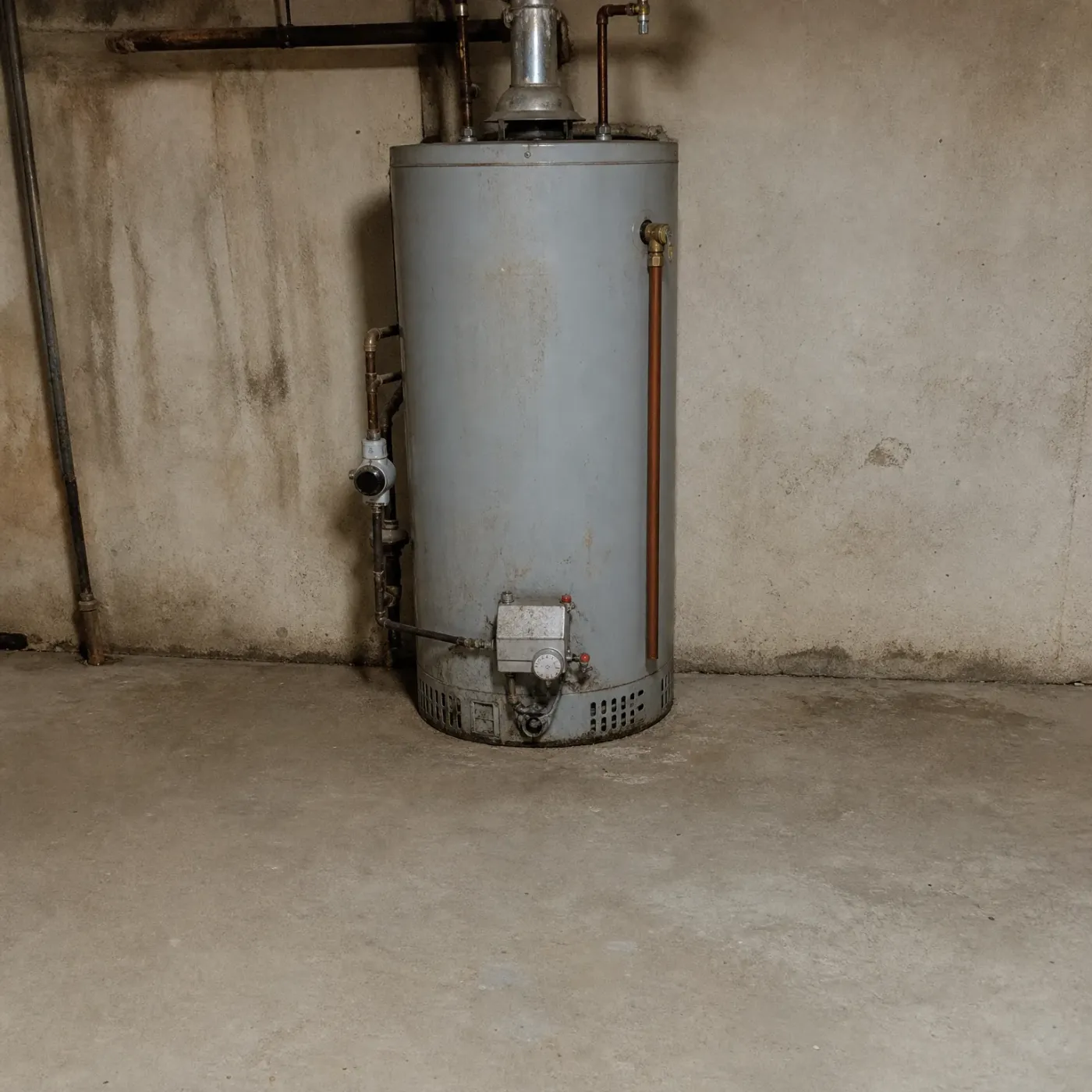
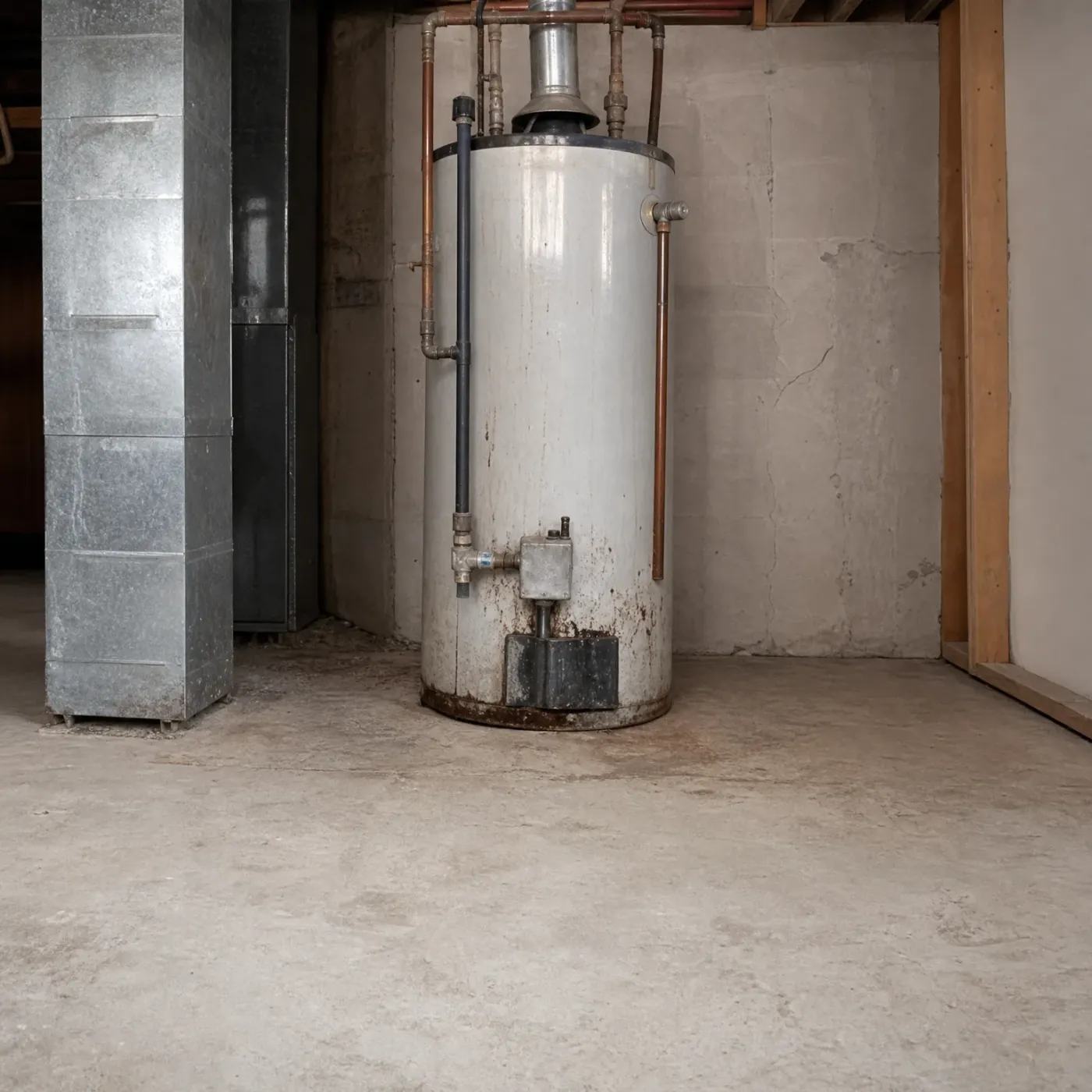
An old rusting cylindrical gas water heater with copper and steel pipes and a flue stands against a concrete basement wall beside metal ductwork on a bare concrete floor.
Before you get your water heater repair
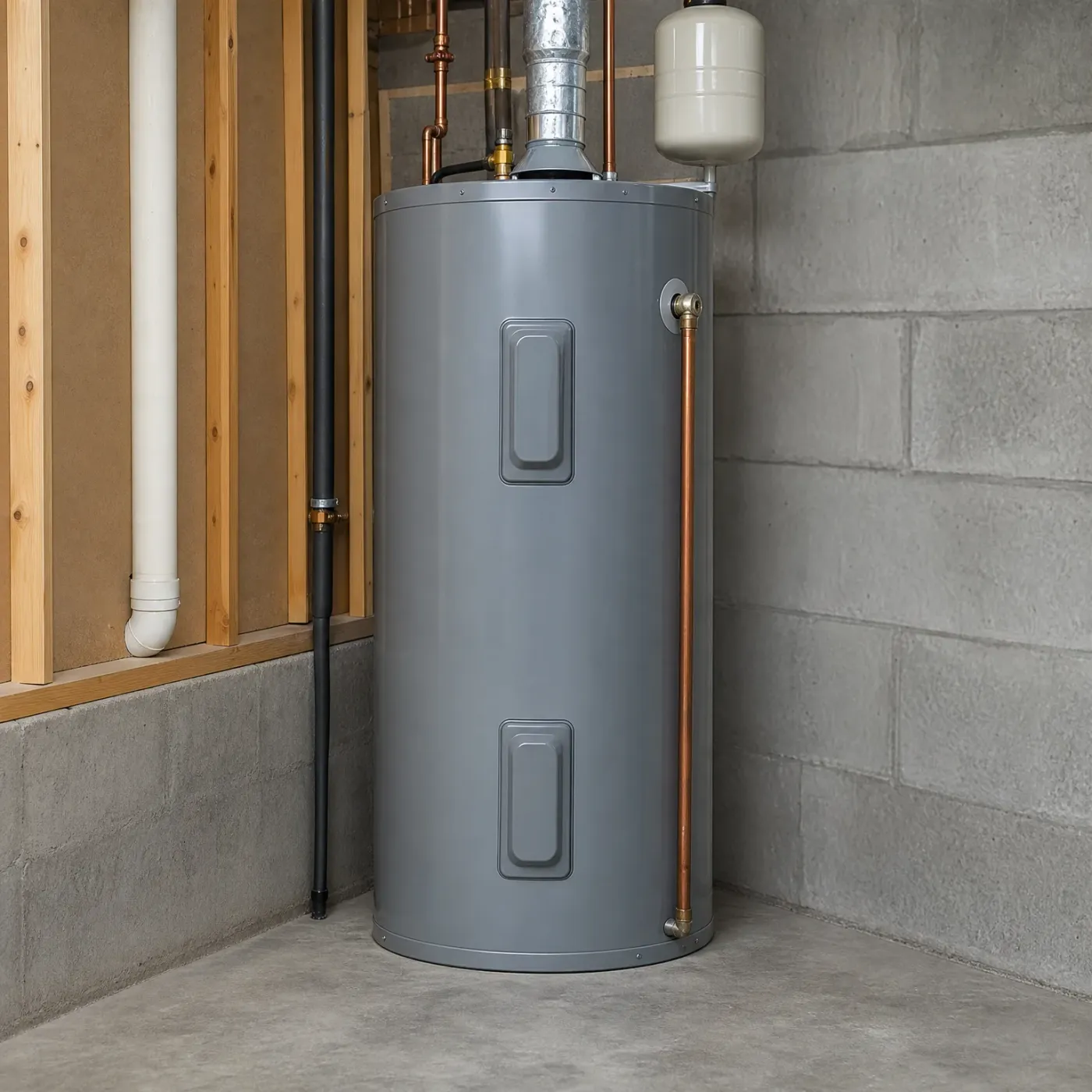
A gray cylindrical water heater with copper piping and an expansion tank stands in a basement corner beside a concrete block wall and exposed wood framing.
After you get your water heater repair

Which Part Is Behind It

Element failure

  • A dead lower element still lets the upper one heat the top of the tank, so you get a few minutes of warm water before it turns cold.
  • A failed element is a straight swap on most tanks and doesn't call for draining the whole system down to bare metal.
  • Testing an element with a multimeter settles the question fast, so a contractor isn't guessing at what to replace.
  • If the element has burned out once, sediment sitting on it from a tank that's never been flushed is often why.
  • This doesn't explain water that's warm but never hot, since a working element should still bring its half of the tank to full temperature.

Thermostat failure

  • A bad thermostat can leave both elements running at a lower setting than you've dialed in, so the water never gets past lukewarm.
  • Thermostats sit against the tank wall behind an access panel, held in place by a bracket, and they fail without warning.
  • A stuck or miscalibrated thermostat sometimes shows up as water that was fine last week and isn't now, with nothing else changed.
  • Replacing a thermostat means shutting off power at the breaker first, since the wiring sits live behind that panel.
  • If both the upper and lower thermostats are original to the tank, one going bad often means the other isn't far behind.
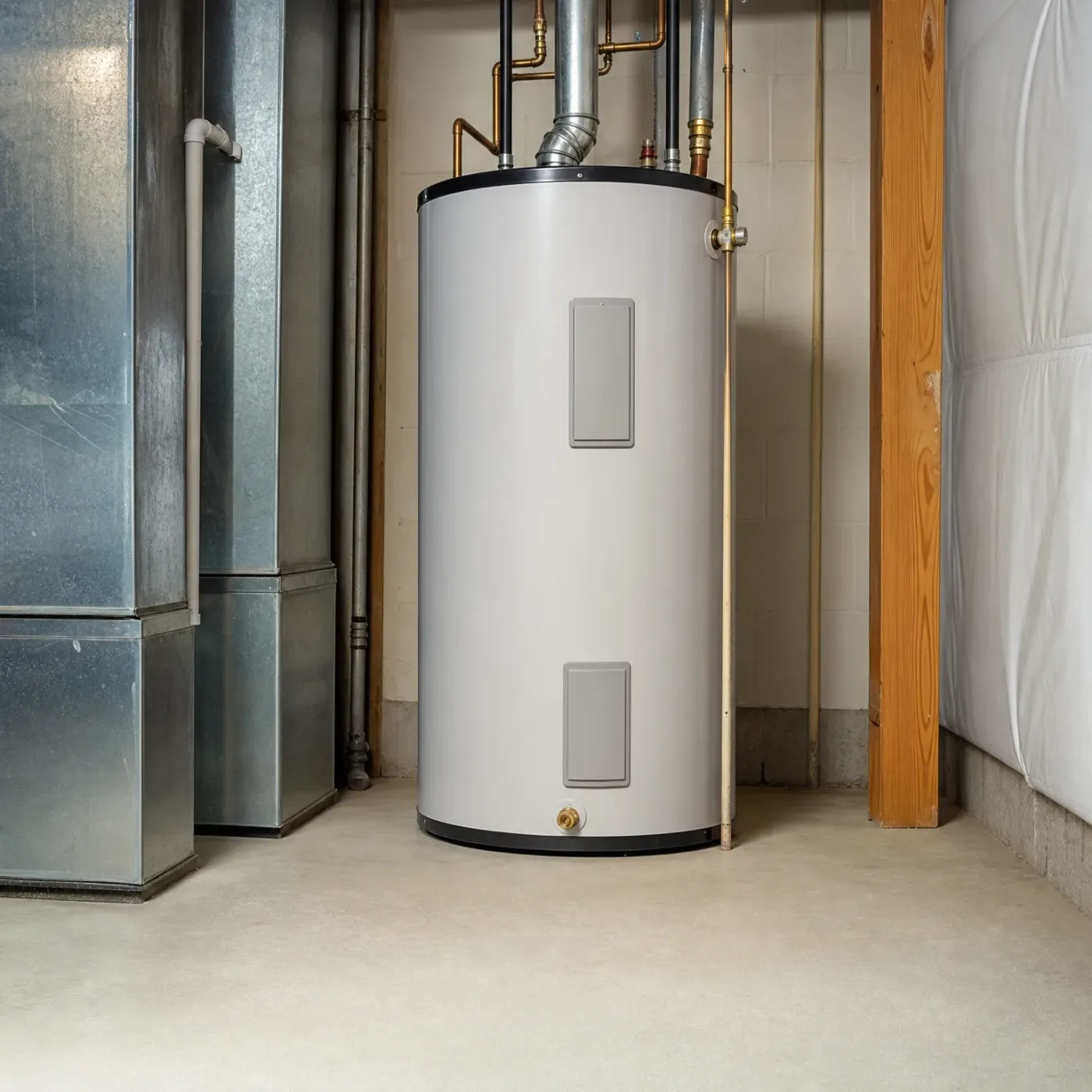
A white cylindrical water heater with two access panels stands on a concrete floor in a basement corner, beside galvanized ductwork, copper and metal pipes, a wooden post, and a concrete block wall.

Working the way it should

This tank is heating both elements in turn and holding temperature at the thermostat setting. The panels stay closed, the drain valve stays dry, and the connections at the top show no sign of corrosion. Water coming out of the tap stays hot until you're done with it.

An older gray cylindrical gas water heater with copper and steel piping and a flue, standing on a concrete floor against a stained concrete wall.

Lukewarm and getting worse

A tank like this one is a good reminder that age matters here. Corrosion on the fittings or a flue vent that's seen years of use often points to a unit nearing the end of its life, not just a failed part. If yours looks like this, a repair call tells you which one you're dealing with.

A woman with dark hair in a bun reclines on a sofa with her eyes closed, wrapped in a cream fleece blanket, a closed blue hardcover book resting in front of her, with a lit lamp and a vase of dried flowers in the background.
A smiling bearded man in a navy sweater sits at a candlelit dinner table with a glass of red wine, a bowl of salad, and plates of food in the foreground.

Hand off the water heater problem

Answer a few questions instead of calling shop after shop.

You're not committing to anything by asking.

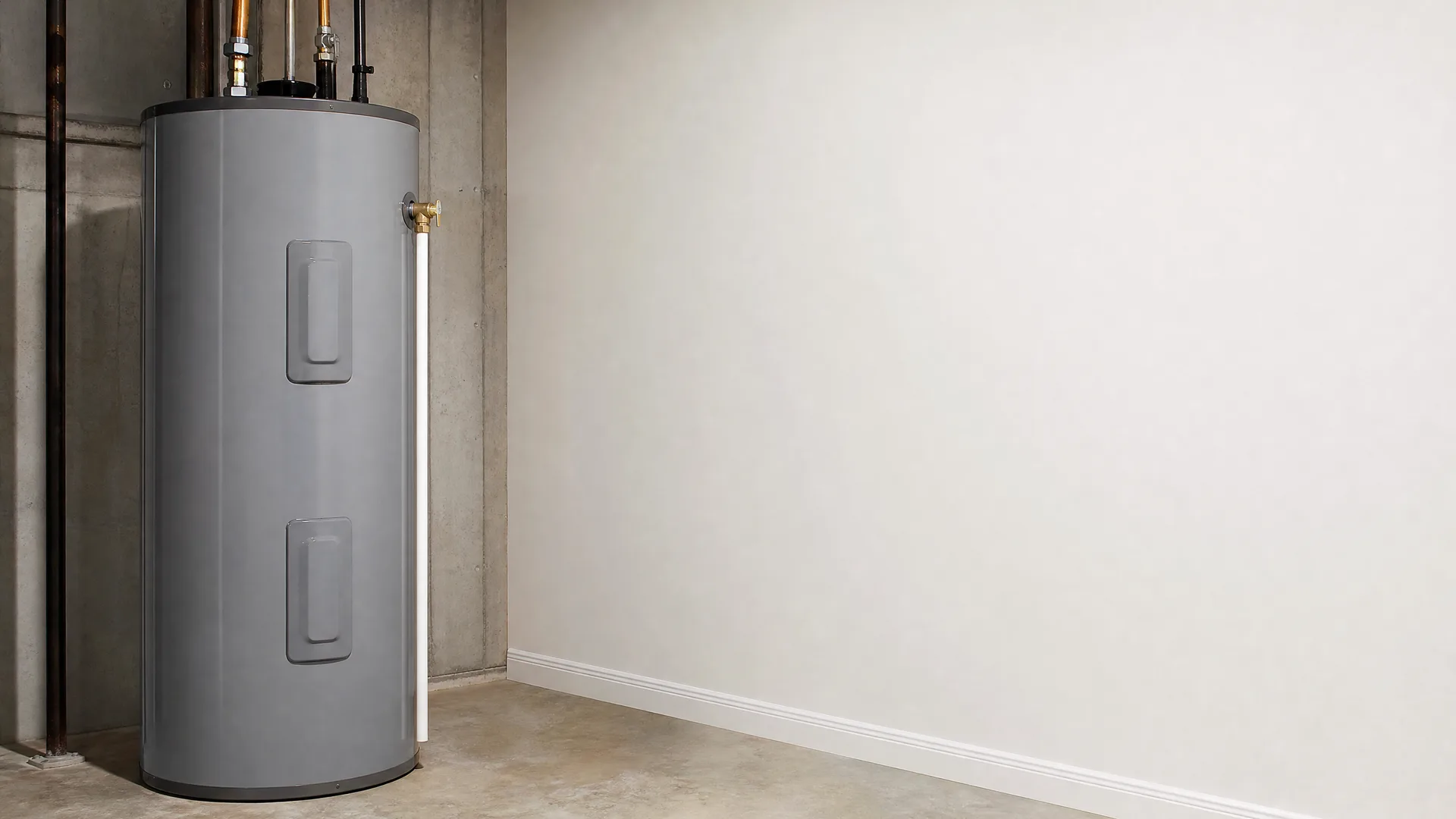
A gray cylindrical electric water heater with two access panels stands in a corner of a room with a concrete floor, connected to overhead pipes and a white drain pipe, beside a plain light-colored wall.

What a short shower tells you

Two or three minutes of warm water before it turns cold is the upper element doing its job alone. A full tank of cold from the first minute points somewhere else, often the thermostat. Either way, the dial on the front doesn't fix it. Turning it up just asks a failed part to work harder, and it won't.

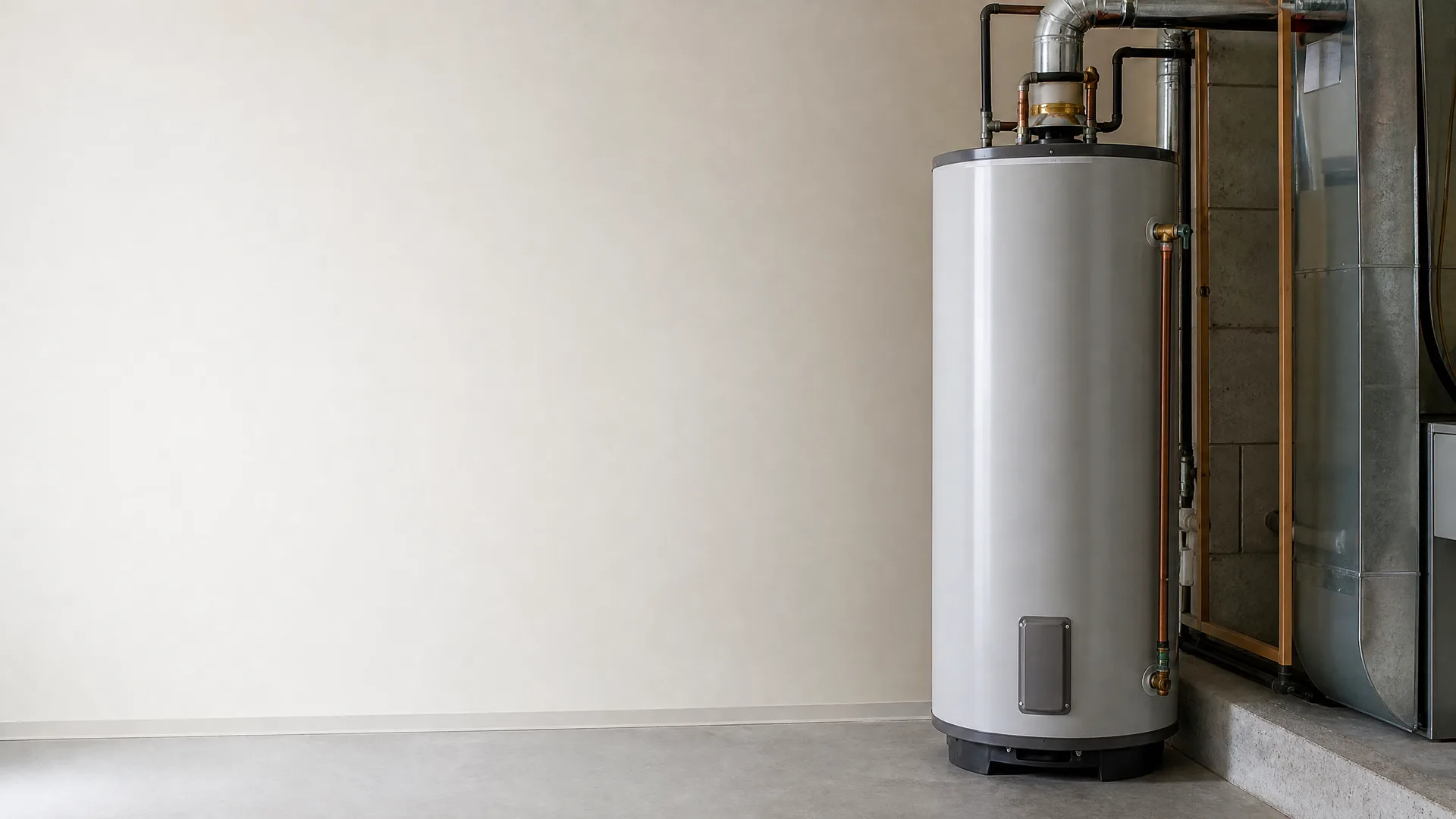
A tall cylindrical water heater with copper and metal pipes at its top stands against a plain beige interior wall on a concrete floor, beside ductwork and a raised concrete step.

What this costs you in the meantime

An electric water heater with a dead lower element still runs the upper one, so the bill doesn't drop with the comfort. You're paying to heat a tank that can't give the household what it needs for dishes, laundry and a full shower in the same evening. Waiting on it doesn't save money. It just stretches out the inconvenience while the power keeps going toward half a tank of hot water.

What's going on in your shower right now

You turn the water on and it starts warm, then a few minutes in it turns cold fast, sometimes mid-rinse. Or it never gets past lukewarm at all, no matter how long you let it run. Someone showers after work and gets the cold version while the first one in the morning got lucky. The dial on the tank might already be turned up as far as it goes, and it still doesn't help. Left alone, a failed element doesn't fix itself, and the one element still working will eventually wear out carrying the whole load by itself.

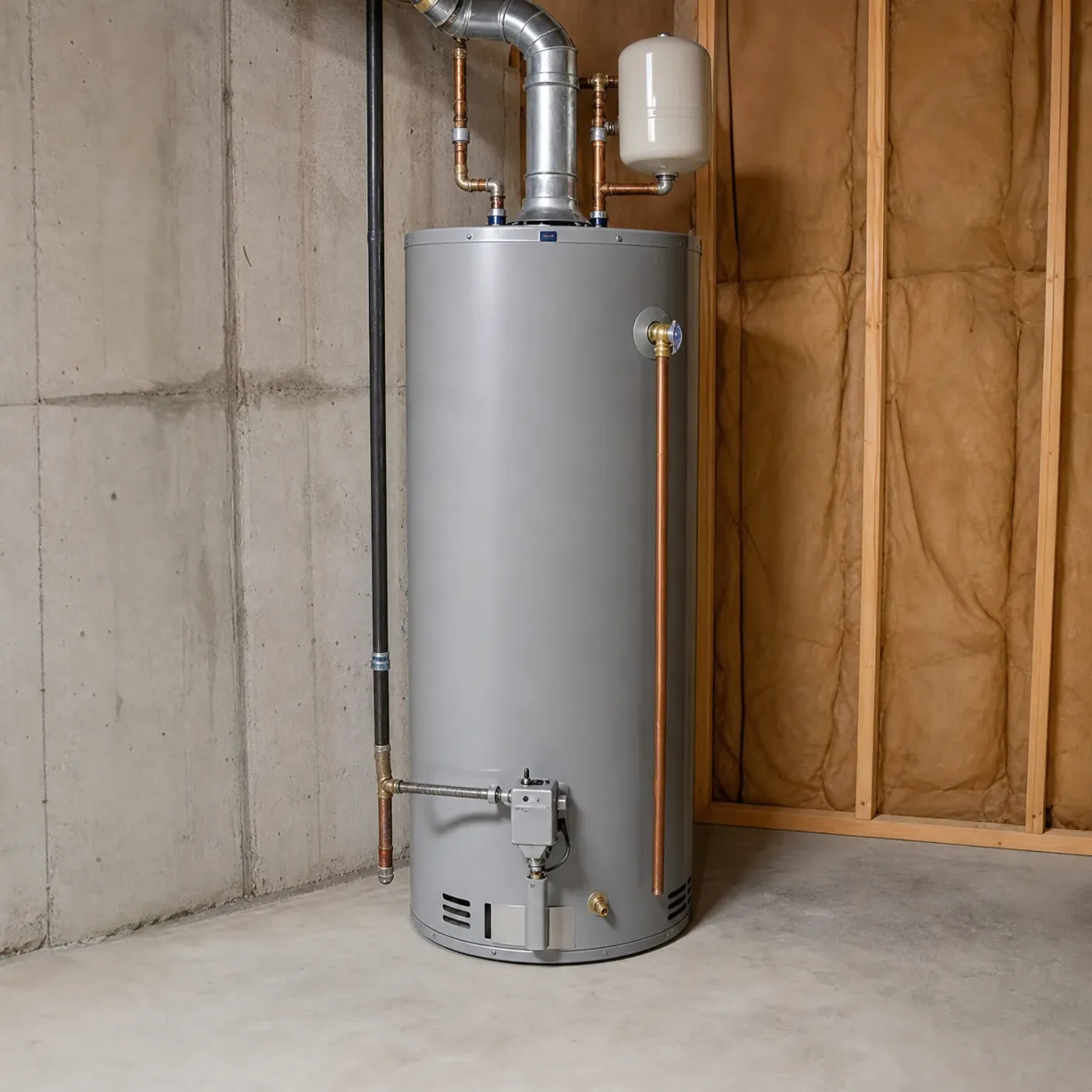
A gray cylindrical gas water heater with copper piping, flue vent, and a small expansion tank stands in a basement corner between a concrete wall and an insulated stud wall.

Tank holding temperature

This is what a working setup looks like. Copper and black iron pipes run clean into the top, the flue vent draws straight up, and the expansion tank above is doing its job absorbing pressure. Water coming out of the tap stays hot until you shut it off.

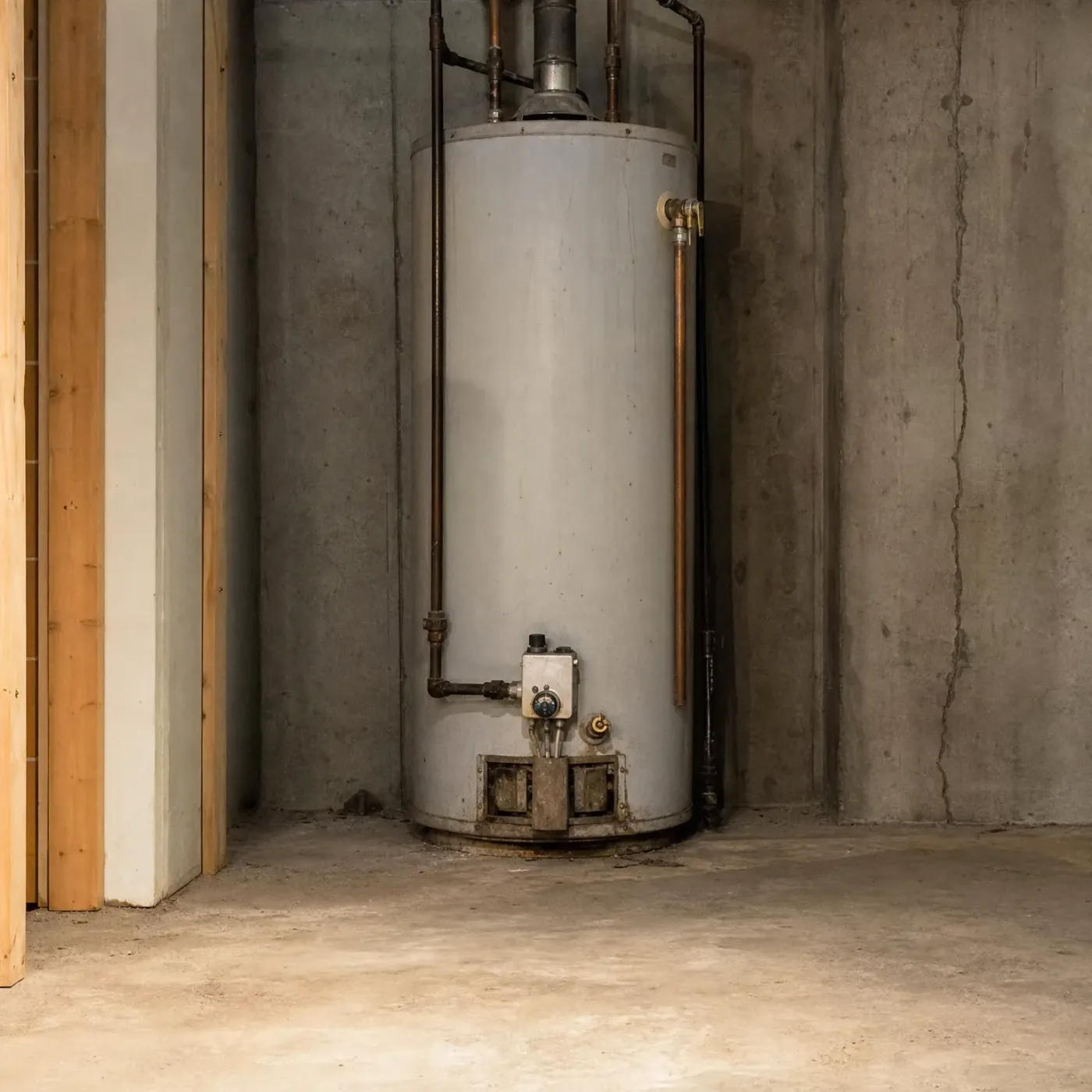
An older gas water heater with copper and black pipes stands in the corner of a bare concrete basement next to a wood-framed partition wall.

Tank losing the fight

Same kind of tank, same pipe runs, but something inside has quit. The gas control valve at the base still shows a flame setting, yet the water never holds. On an electric tank it's usually an element or thermostat. On gas, that valve or the thermocouple behind it is often where to look.

70.8% of homes statewide heat with electricity

Almost 71 out of every 100 homes in South Carolina heat water with electricity, yours likely included. That means two elements doing the work in your tank, and when one fails the other keeps running on its own, which is why you still get a few warm minutes instead of nothing at all.

ACS 2020-2024 5-year B25040

Where Your Hot Water Stands

  • Warm water that fades fast or never shows up at all points to the heating element or thermostat, not a dying tank.
  • A few warm minutes before cold means the upper element is still working alone while the lower one has failed.
  • Cold from the first minute points more toward the thermostat than either element.
  • Electric tanks with two elements are common in South Carolina homes, and that setup is exactly why the trouble shows up gradually instead of all at once.
  • A failed element is a straight swap on most tanks and doesn't call for draining the whole system down.
  • Instead of calling around and explaining the same problem twice, sending the form here puts a licensed contractor on it and you're done looking.

Lukewarm water in a South Carolina home almost always traces back to one of two parts inside the tank, the upper element, the lower element, or the thermostat that tells them when to run. None of that means the tank itself is done. A few minutes of warm water followed by cold tells you the lower element quit while the upper one kept working on its own, the setup you'd expect in a two-element electric tank like most homes here have. Cold water from the moment you turn the tap points more toward the thermostat losing its read on the tank. Either way, the fix is a part swap, not a replacement water heater, and not a full system drain. What's left is finding someone licensed to open the panel, test the elements, and put in the right part. That's the piece that eats an evening, calling a few numbers, describing the same lukewarm shower three times, waiting on quotes that don't say much more than the first one did. Sending the form here skips that part. A licensed contractor gets the details once, and the search that would have taken up your evening is already done. You still get an honest look at what failed and why, just without the hour of phone calls first. The water heater gets fixed either way. How much of your evening it costs you to get there is the part that changes.

A lit ceramic table lamp with a linen shade sits on a round wooden side table with a small vase of greenery and a dark shallow bowl, beside a beige upholstered sofa with a cushion and knit throw, below a framed artwork on a pale wall.
Corner of a beige linen sofa with a large woven cushion and a fringed knit throw, beside a potted leafy tree in a woven basket against a neutral wall.
Sunlit interior corner with a wood-framed armchair with beige cushions and a striped pillow, a leafy plant in a tall ceramic pot, a window with wood sill showing green foliage outside, and dark wood flooring.
A lit black path light beside a stone walkway leading to a dark front door of a white clapboard house, with shrubs and flowering plants in the bed at dusk.
A covered porch at dusk with a wooden front door, a lit lantern wall sconce on gray horizontal siding, a black rocking chair with a cream throw, a potted white flowering plant, a coir doormat, and a window showing a lit interior lamp.

Send one request and you're done looking

Describe your water heater job once, to one pro.

I'm done searching

It costs nothing to send, and you don't have to hire anyone.