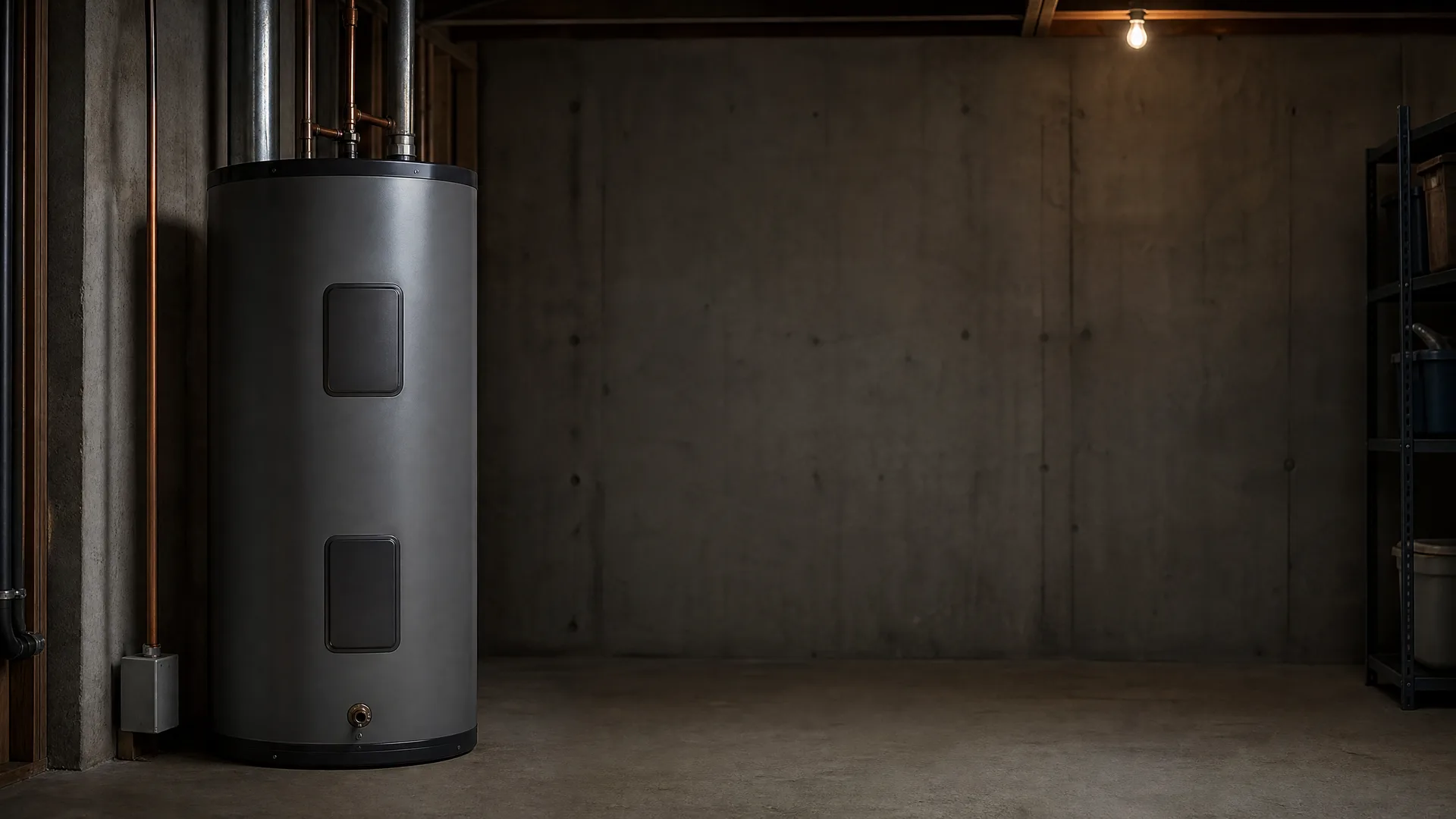
A tall cylindrical water heater with a metal flue pipe and copper plumbing stands against a concrete wall in a dim basement, with a black shelving unit holding plastic storage bins nearby.

The right pro for this job

What size water heater a South Carolina home needs

The right size depends on your household, how many bathrooms you're running, and whether you're on electric tank, tankless, or heat pump. Get that wrong and you're either short on hot water or paying to keep a bigger tank hot than you need. Answer a few questions and a contractor who installs water heaters in South Carolina will reach out to size it for your home.

Connect with a pro

Most South Carolina homes do fine with a 40 to 50 gallon water heater, and the right size comes down to how many people live there and how many bathrooms share the hot water. A household of two or three usually needs 40 gallons. Four or more, especially with two bathrooms running showers back to back, calls for 50 gallons or a tankless unit sized to match the flow of two fixtures at once. Since most homes here heat water with electricity, tank recovery is slower than gas, so sizing a little larger matters more than it would with a gas unit. A tank that is too small runs out of hot water mid-shower. One that is too large costs more to keep heated for no benefit. Getting the number right the first time means not thinking about it again for years.

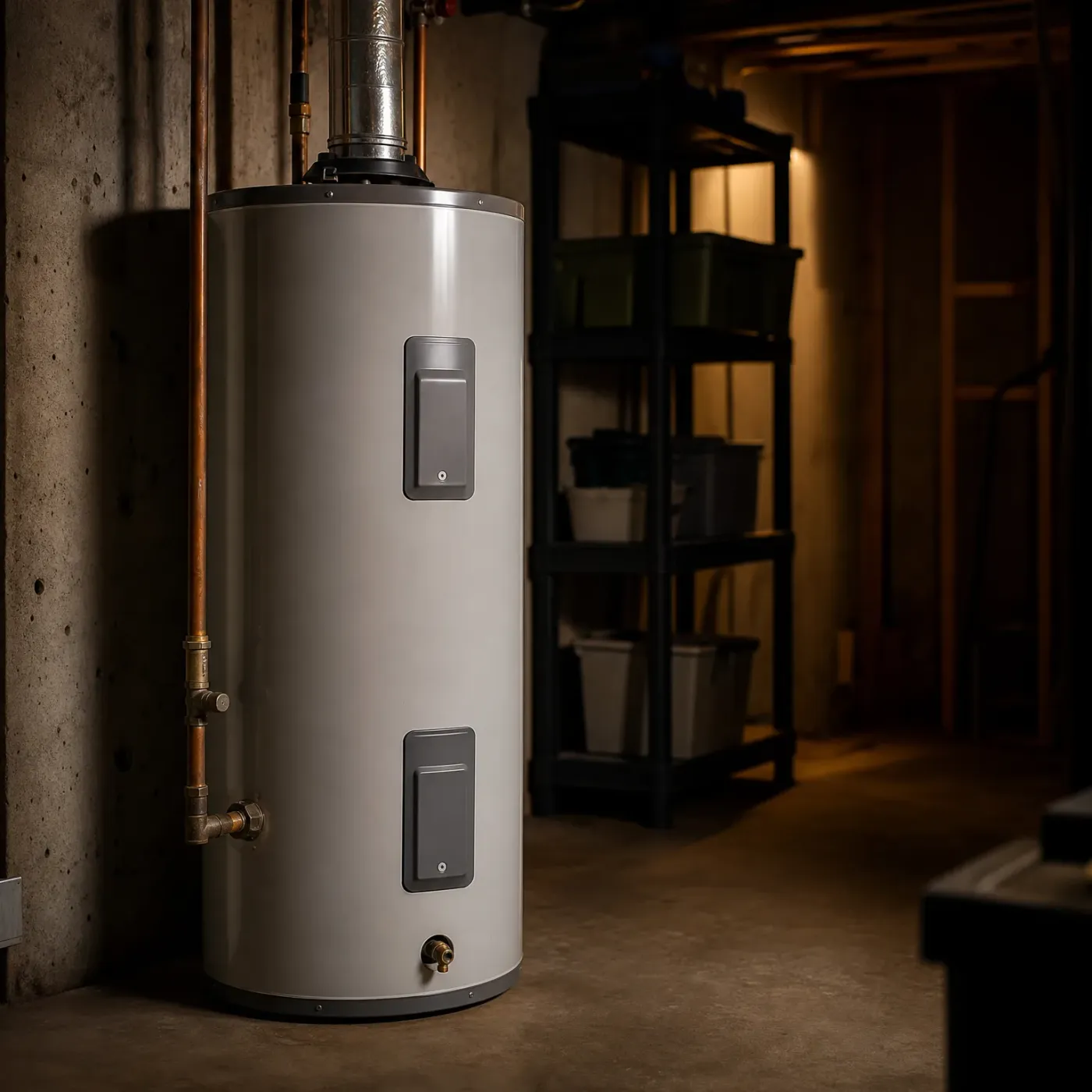
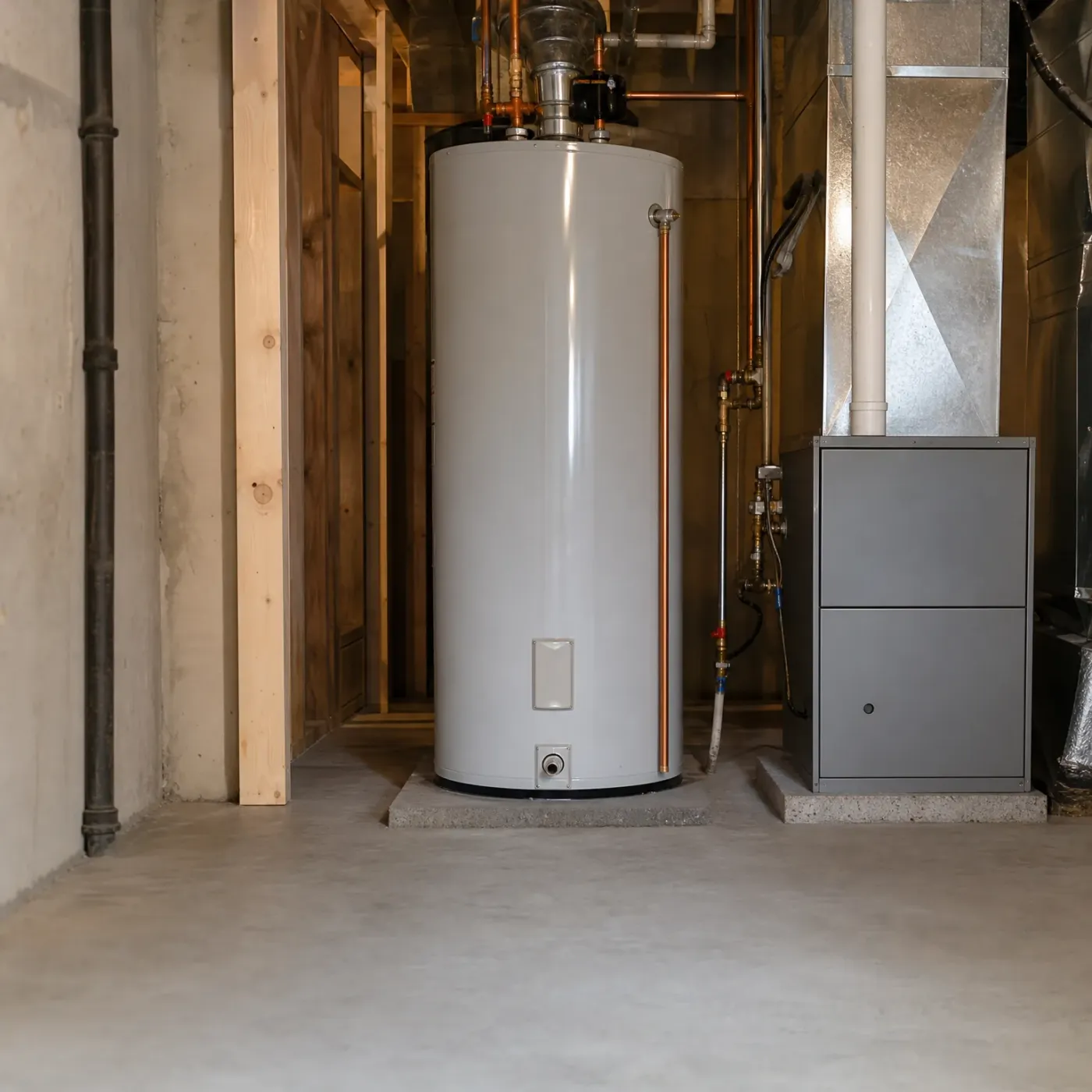
A white cylindrical water heater on a concrete pad in a basement, with copper and metal piping above it and a gray furnace cabinet with ductwork to the right.
A properly sized tank keeps up with back to back showers and still runs the dishwasher without complaint.
A cylindrical water heater with two access panels and copper pipes stands on a concrete floor against a painted concrete block wall.
A tank that's too small or too old to hold a charge leaves the last person in line with a cold rinse.

Tank size is the number people ask about, but first hour rating is what tells you if you'll have hot water when you need it. That number says how many gallons the heater can deliver in 60 minutes, combining what's stored with how fast it recovers. Electric tanks recover slower than gas, so if your home runs on electric, which most homes in South Carolina do, the tank needs more standby capacity to get three people through showers back to back. A heat pump unit changes the math again. It pulls heat from the air around it instead of generating it directly, so a garage or utility room that stays warm most of the year helps it keep up. Tankless units skip storage entirely and size by flow rate, gallons per minute, so two showers and a dishwasher running at once need a unit rated for that combined draw. And inside any electric tank, sediment settles at the bottom over time and insulates the lower element, which quietly cuts your first hour rating even if the tank was sized right to begin with.

How sizing actually works

  • First hour rating matters more than tank size, since it tells you how much hot water the heater can deliver in 60 minutes.
  • Electric water heaters recover slower than gas, so an electric tank running your home needs more standby capacity to cover back to back showers.
  • A heat pump water heater pulls heat from the surrounding air, which works well in a South Carolina garage or utility room that stays warm most of the year.
  • Tankless units size by flow rate, measured in gallons per minute, not by gallons stored, so two showers and a dishwasher running together need a unit rated for that combined draw.
  • The dip tube feeds cold water to the bottom of the tank, which is why a tank sized too small loses its hot layer fast once demand picks up.
  • Sediment settling at the bottom of an electric tank insulates the lower heating element, which cuts the first hour rating even on a correctly sized unit.
A smiling man with dark curly hair in a dark green henley shirt sits on a light sofa in a living room with large windows, a lamp, shelving, a stone fireplace, and a bowl of popcorn in the foreground.
A smiling man in a dark long-sleeved henley shirt sits on a beige sofa in a living room, with a bowl of popcorn and a remote on the table in the foreground and shelves, a lamp, and a doorway behind him.
A smiling man with graying hair and stubble in a blue henley shirt sits on a gray sofa with cushions in a living room, with a bowl of popcorn on a wooden table in the foreground.
A smiling man in a dark green long-sleeve shirt reclines on a sofa in a dimly lit living room, with a bowl of popcorn on a side table in the foreground and a bookshelf, lamp, and houseplant behind him.
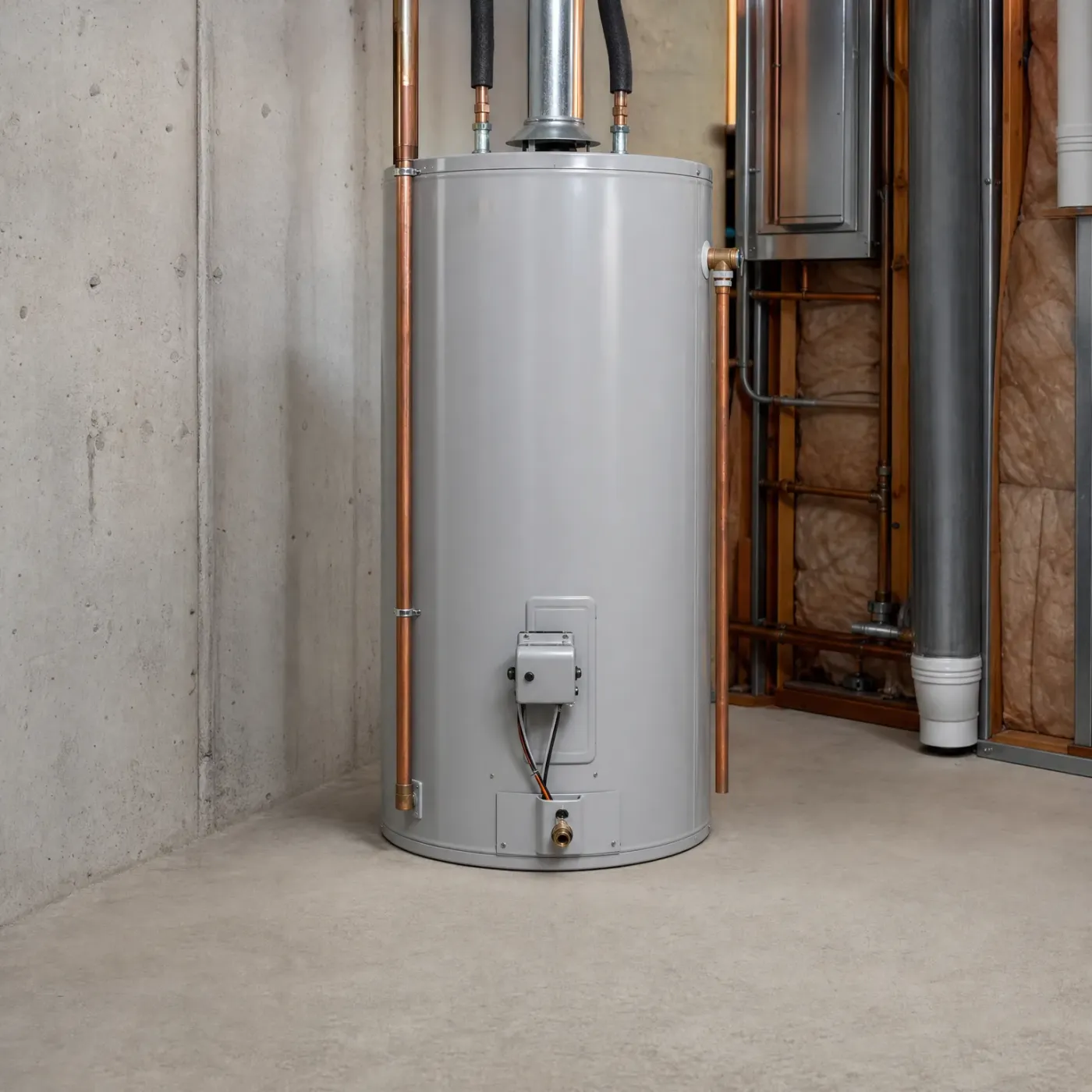
A gray cylindrical water heater stands in a basement corner against a concrete wall, with copper pipes, insulated flex lines, a metal flue, and insulated wall framing with ductwork to the right.

Sized right

This tank matches the house it serves. Showers run back to back, the dishwasher gets its fill after, and the pressure relief valve and drain stay dry because nothing is straining. The copper lines and flue show a unit doing its job without being pushed past what it holds.

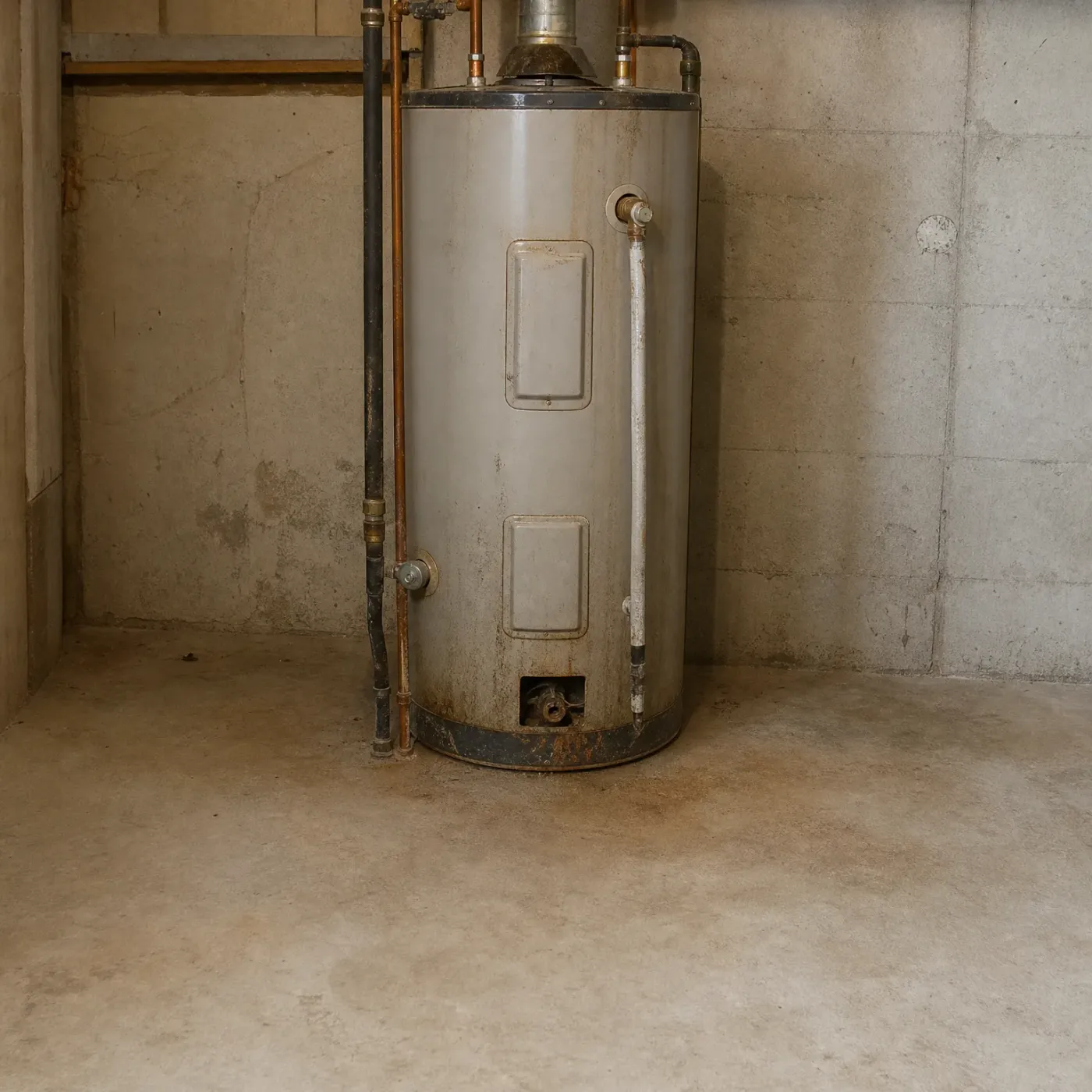
A rusting gas water heater with copper and steel pipes stands against a concrete block wall on a bare concrete floor.

Outgrown its tank

Rust at the base and along the body means the tank has been working harder than it should for a while now. Whether it started too small for the house or just aged past its years, the result is the same: it can't hold a charge long enough to get everyone through a morning.

Why does hot water run out before everyone's done?

You notice it when the second shower turns cold, or the dishwasher starts and someone loses their rinse water. The tank is working harder than it should, which with electric heat means more time spent reheating and a bill that reflects it. Some households get used to running showers in shifts, timing laundry around whoever showered last. That's a sign the tank is undersized for the people using it, not something to just work around. An electric tank already recovers slower than gas, so one that's also too small has no cushion when two or three people need hot water inside the same hour. Left alone, the unit cycles more than it should, and that wear adds up over the years you own it.

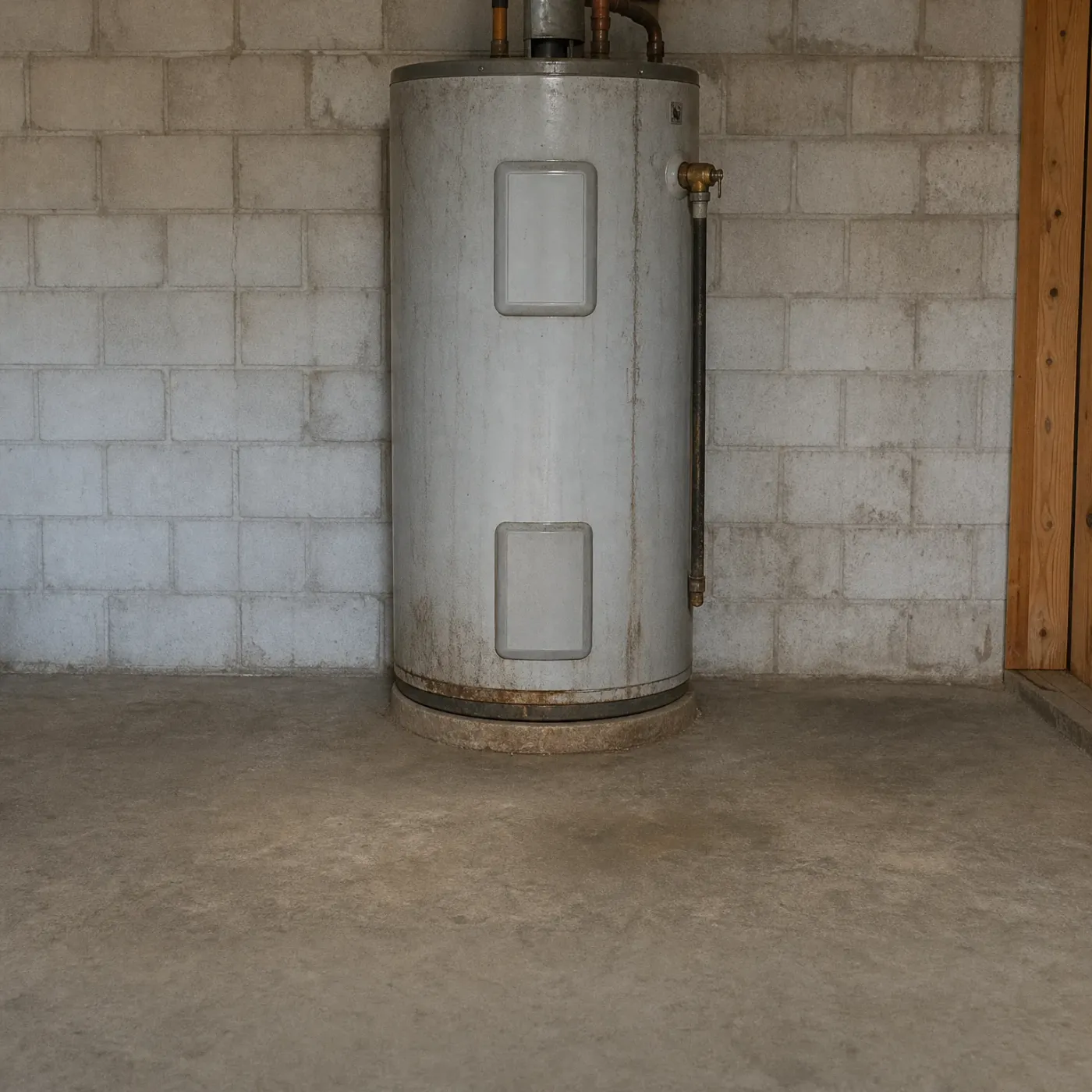
A gray cylindrical gas water heater with copper and black pipes stands in the corner of a basement with concrete block walls and a bare concrete floor.
Before you get your water heater installation
A gray cylindrical water heater standing in a basement corner against a concrete wall, with copper and black pipes, a metal flue, and ductwork nearby, next to wood framing on the right.
After you get your water heater installation

Matched to your water heater job

Once you send the form, finding a pro is off your list.

Asking costs nothing, and the choice to hire stays yours.

A gray cylindrical water heater standing on a concrete floor in a basement corner, with copper pipes and a metal duct running overhead along bare concrete walls.

Running clean

The copper lines sit tight and the vent pipe draws the way it should. No rust at the fittings, no damp around the base. A tank built for this house doesn't have to strain, and it shows in how quiet it sits in the corner.

A white cylindrical water heater with rust stains and two access panels stands in a basement corner between a painted concrete block wall and a bare concrete wall, with metal pipes running up and alongside it on a concrete floor.

Running on borrowed time

Rust has worked its way across the tank and down toward the drain valve. Once the steel starts going like this, it's not a question of if it fails, just when. An undersized tank wears the same way, just faster, from being asked to recover more than it can.

How do I know what first hour rating I actually need?

First hour rating gets printed on the yellow EnergyGuide label, but the number by itself doesn't mean much until you match it against your own mornings. If two people shower back to back and someone starts the dishwasher before the second one's done, you need to know what that tank can actually deliver in that window, not just how many gallons it holds.

Match the first hour rating to your busiest hour, not your household size

Count what actually runs in your heaviest hour. A shower runs about 10 to 15 gallons, a dishwasher around 6, a load of laundry in hot water more on top of that. Add those up for the hour you use the most hot water, usually mornings, and that total is the first hour rating you need. A 50 gallon electric tank often carries a first hour rating in the high 50s to low 60s, which covers two showers and a dishwasher without the second shower running cold. Since electric tanks recover slower than gas, that first hour number matters more for electric homes here than the gallon size printed on the tank itself.

A woman in a dark gray sweater reclines on a couch with her eyes closed and a knit blanket over her lap, an open book resting face-down in front of her, with a lit table lamp and shelving blurred in the background.
A bearded man in a dark navy sweater over a collared shirt smiles and looks off to the side while seated at a dinner table with a glass of red wine, a lit candle, and a plate of food in the foreground of a dimly lit room.

70.8% of homes statewide heat with electricity

Most houses in South Carolina run their water heater on electricity rather than gas. That matters for sizing because electric tanks recover slower, so getting the gallon count and first hour rating right carries more weight here than it would in a gas-heated home.

ACS 2020-2024 5-year B25040

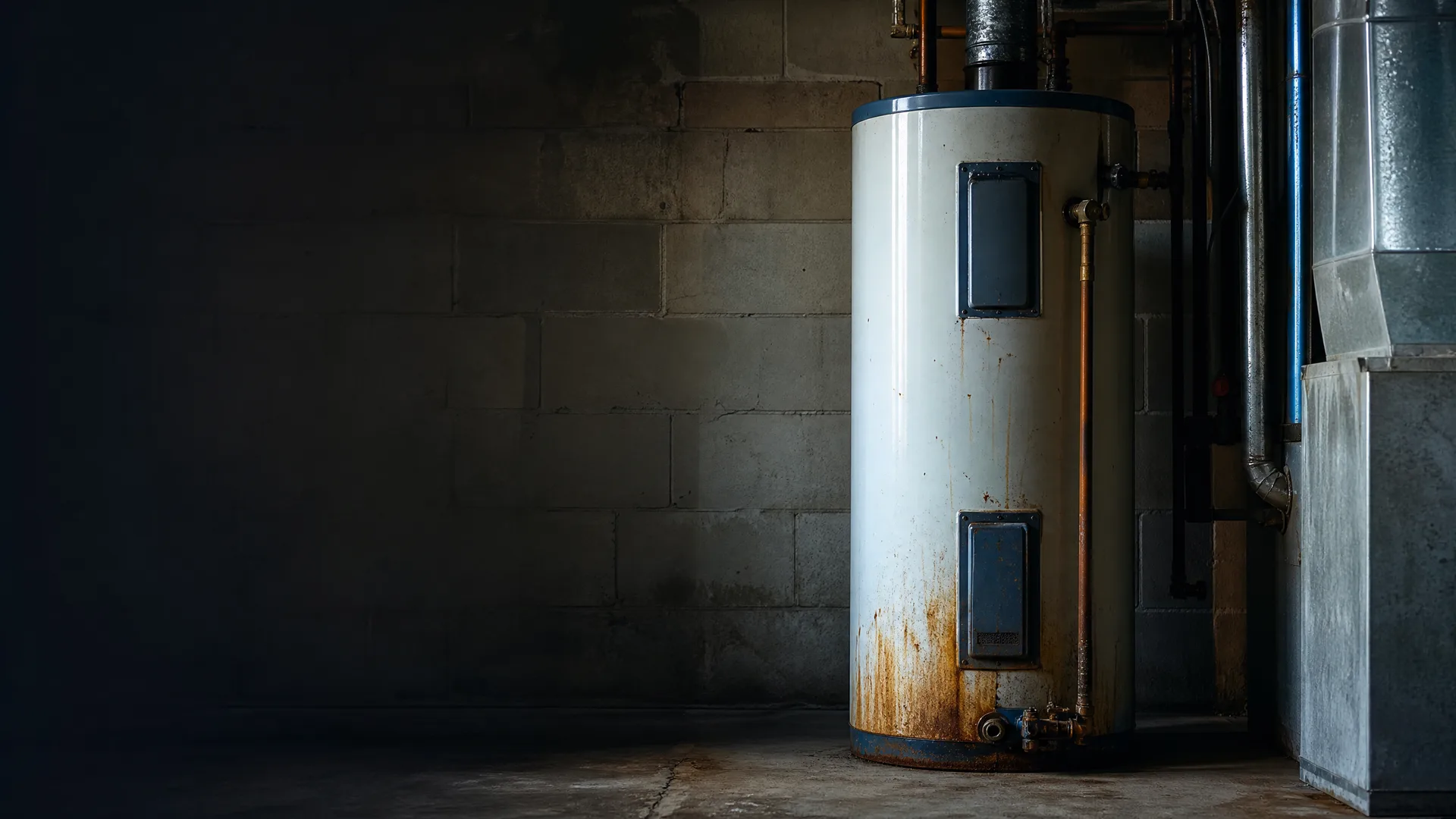
A rusting white and blue water heater with copper and steel pipes stands against a concrete block wall in a dim basement with a bare concrete floor.

The light's gone outside, and the utility room bulb is doing the work now. You're standing over the tank because the water ran lukewarm again, then cold, halfway through rinsing a pan. Down at the base, where the tank meets the floor, there's a line of rust creeping out from under the seam. You crouch and touch it and your fingers come away orange. It's been doing this a while, you figure, you just hadn't looked. Upstairs someone's waiting on the shower to warm back up. You straighten up, wipe your hand on your jeans, and stand there a second longer, looking at the streaks like they might explain themselves.
A woman stands in the open black front door of a white-sided house with a dark shingled roof while a man in a navy jacket approaches along the walkway, with lantern wall lights, a potted shrub, and flowering garden beds nearby.

The right size is the one that matches your house

A household of two or three does fine with 40 gallons. Four or more, with two bathrooms running mornings and evenings, needs 50 and a first hour rating that holds up to it. Electric tanks recover slower than gas, so in South Carolina that number matters more than the gallon count printed on the side. Get it right and the tank sits quiet in the corner, doing its job without strain.

You've looked at how your household uses hot water and what's been falling short. That's enough to know roughly where you land, but matching it to the actual tank in front of you, the venting, the electrical, what the space allows, takes someone who does this for a living. Once you send the details in, finding that person stops being on you. A contractor who installs water heaters in South Carolina homes gets your answers and reaches out, and you're done carrying it.

A living room corner with a beige sofa and cushion, a round wooden coffee table holding a pale ceramic vase of eucalyptus stems and a wooden bowl, and a curtained window with a potted plant above a latticed radiator cover in the background.
A gray cylindrical water heater with copper pipes stands against a concrete wall in a dim basement, with a bare hanging light bulb and a metal shelving unit at right.

A water heater pro near you

After you send the request, you're done searching.

Step 1 of 3: Equipment