Tell us about the job
Takes about a minute. No obligation.
Electric water heaters put all the thermal work on two components: the heating elements and the thermostats that switch them. Electricity heats more occupied homes in Greenville County, South Carolina than any other fuel, at 56.9% (2020-2024 ACS 5-year). A contractor diagnosing a failed or underperforming water heater in this county goes to those parts first, because scale buildup on the element and thermostat drift are the failure modes that accumulate on electric units over time. Venting and gas valve issues simply do not apply here, so the repair scope narrows to what the electrical system and the tank itself actually show.
Sediment buildup and anode rod failure are the two things a water heater technician finds most often in Greenville County's older housing, and both trace back to the same source: original plumbing that has been running through multiple equipment cycles without the kind of systematic maintenance that would reset the baseline. Half the homes in Greenville County, South Carolina were built in 1992 or earlier (2020-2024 ACS 5-year). Tanks installed into that existing supply-side plumbing inherit whatever mineral accumulation and corrosive conditions the pipes already carry, and a repair call that looks like a straightforward component swap can open into a longer job once the technician sees what the tank's interior actually holds.
The Parts of a Water Heater a Contractor Checks During a Repair
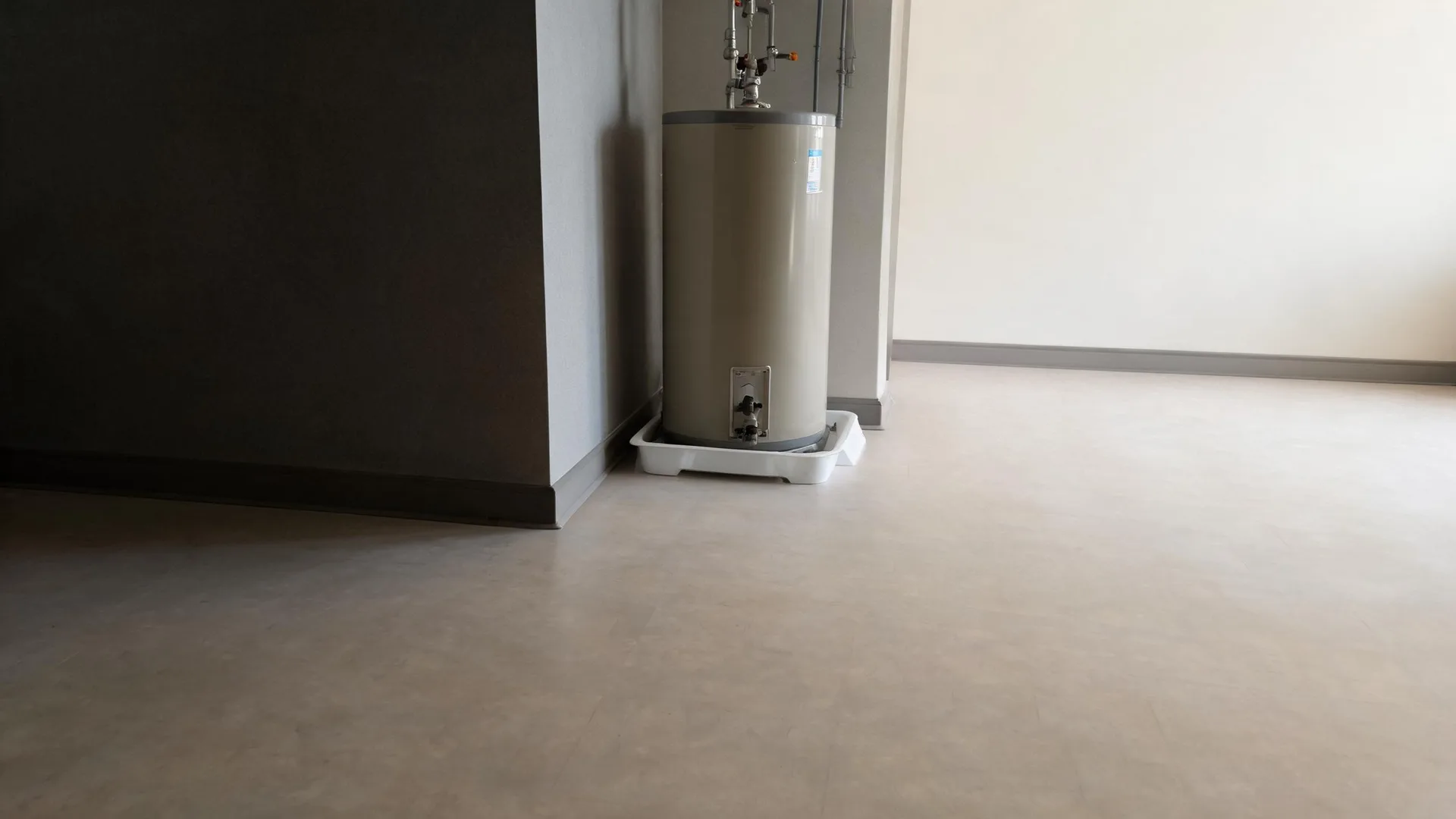
The tank is what most homeowners see: a large insulated cylinder standing in a utility room, garage, or closet, holding a supply of hot water ready for use. At its core is either a burner assembly at the base, in a gas unit, or a pair of heating elements submerged inside an electric one. When hot water runs cold or stops entirely, these are the pieces a contractor looks at first.
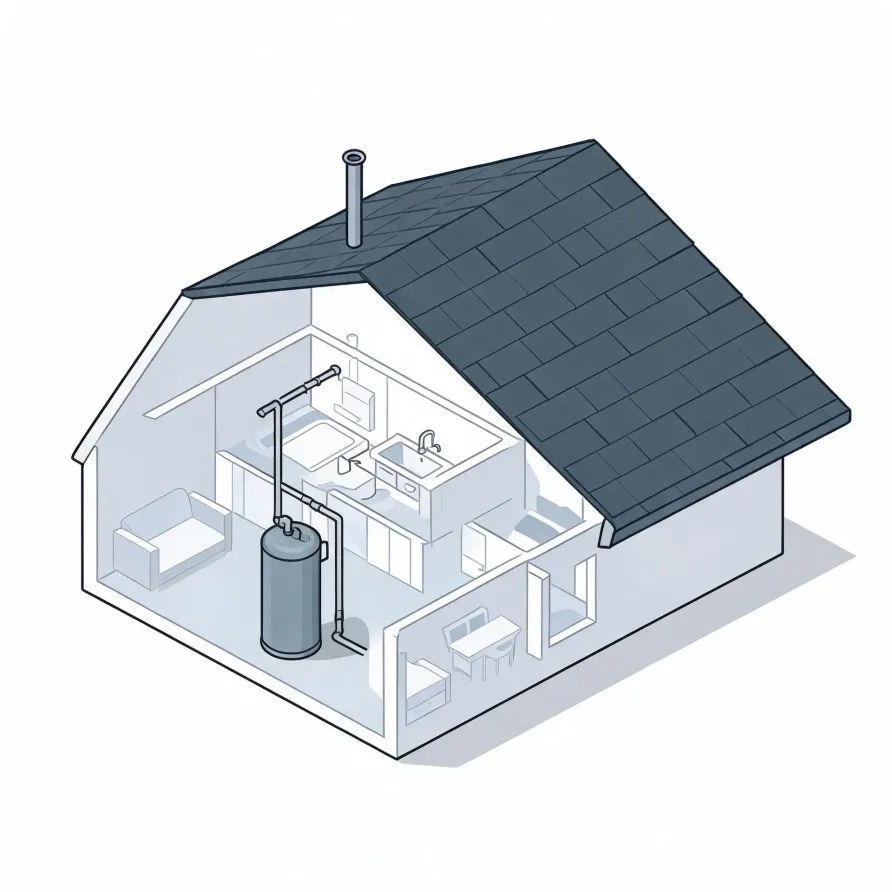
At the top of the tank, the pressure relief valve sits on a short discharge pipe and releases if internal pressure climbs too high. The dip tube runs down into the tank to direct cold incoming water to the bottom, and the anode rod hangs inside the tank to slow corrosion of the metal walls. The thermostat, whether a dial on a gas valve or a small panel on an electric unit, controls target temperature and is a frequent source of complaints about water that arrives too hot, too cold, or inconsistent.
The drawing shows a typical water heater layout, and a licensed contractor will assess which components apply to the specific unit and installation in your home.
Find a contractor in Greenville CountyGreenville County, by the numbers
215 severe weather events were recorded in Greenville County, South Carolina between 2015 and 2024.
NOAA National Centers for Environmental Information, Storm Events Database, bulk CSV export, events 2015-01-01 through 2024-12-31.Half the homes in Greenville County, South Carolina were built in 1992 or earlier (2020-2024 ACS 5-year).
U.S. Census Bureau, 2020-2024 American Community Survey 5-Year EstimatesGreenville County, South Carolina holds 238,260 housing units (2020-2024 ACS 5-year).
U.S. Census Bureau, 2020-2024 American Community Survey 5-Year EstimatesOwners occupy 68.9% of the occupied homes in Greenville County, South Carolina (2020-2024 ACS 5-year).
U.S. Census Bureau, 2020-2024 American Community Survey 5-Year EstimatesSevere Weather Events in Greenville County
Extreme weather puts real strain on water heaters, forcing the equipment to work harder and wearing components down faster than ordinary conditions would. How much of that pressure a home absorbs depends on what the local climate actually delivers.
215 severe weather events, 2015–2024. Source: NOAA National Centers for Environmental Information, Storm Events Database.